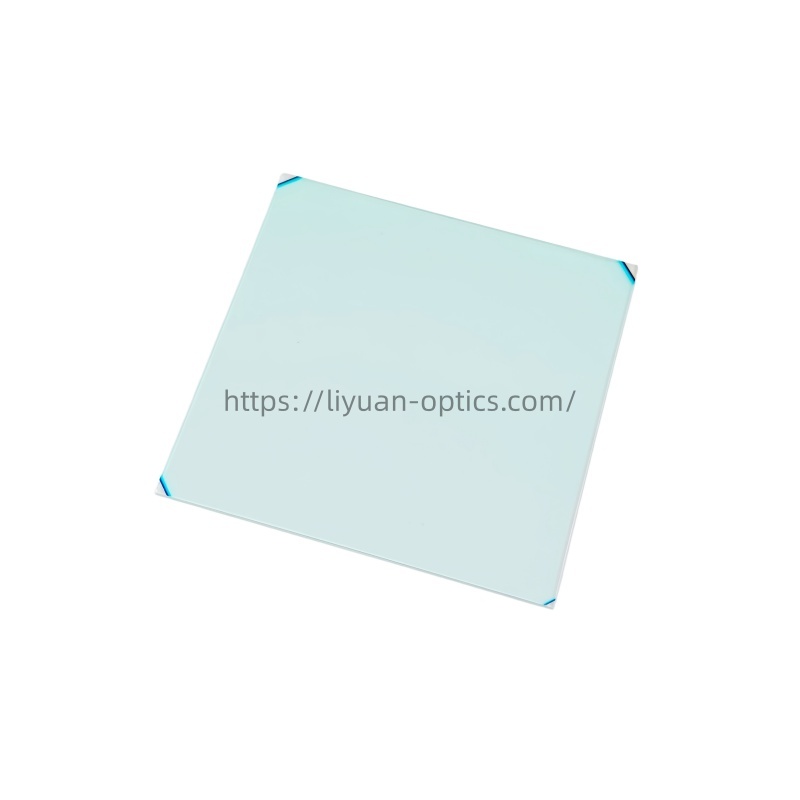
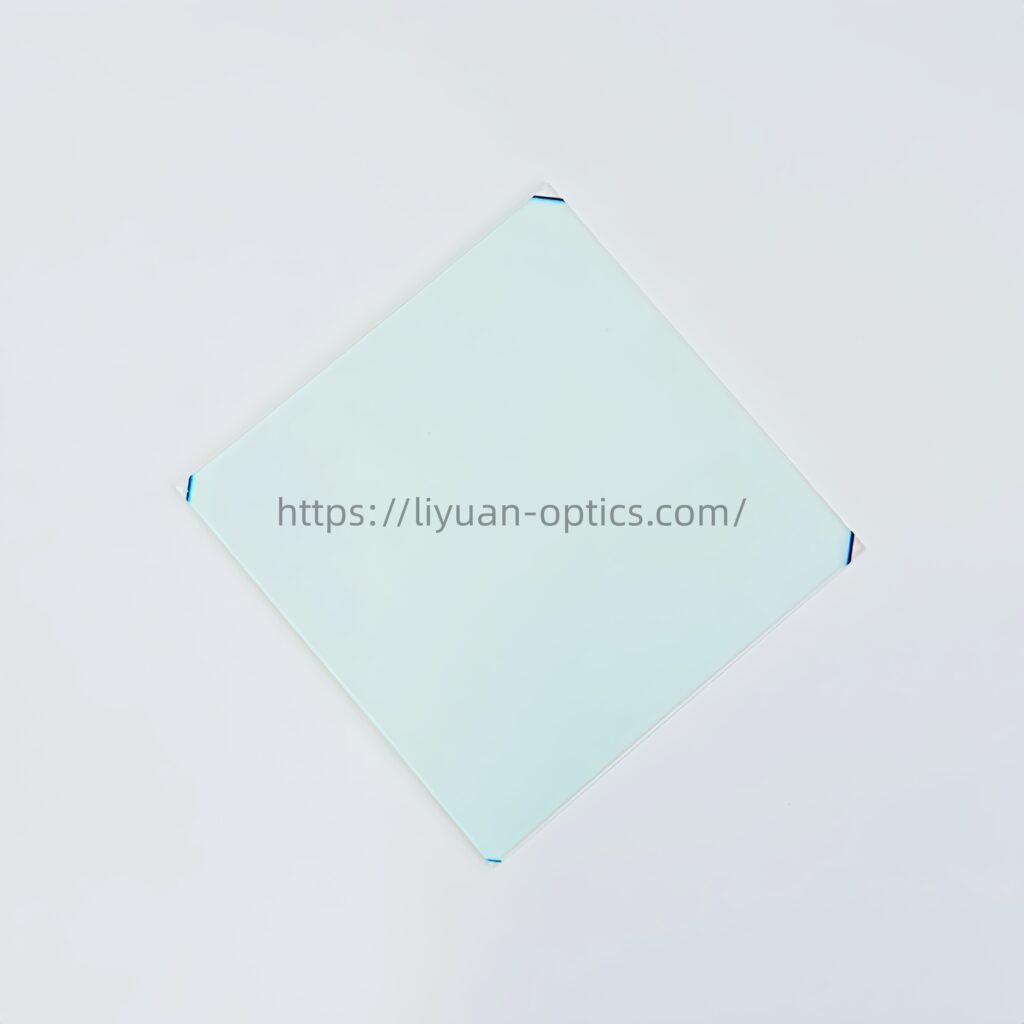
Product Descriptions:
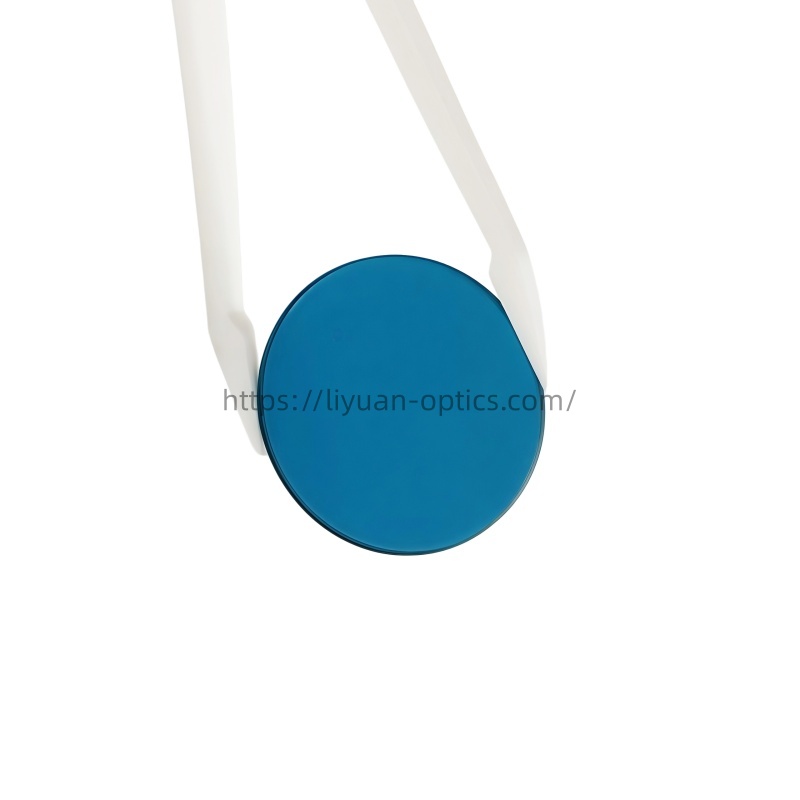
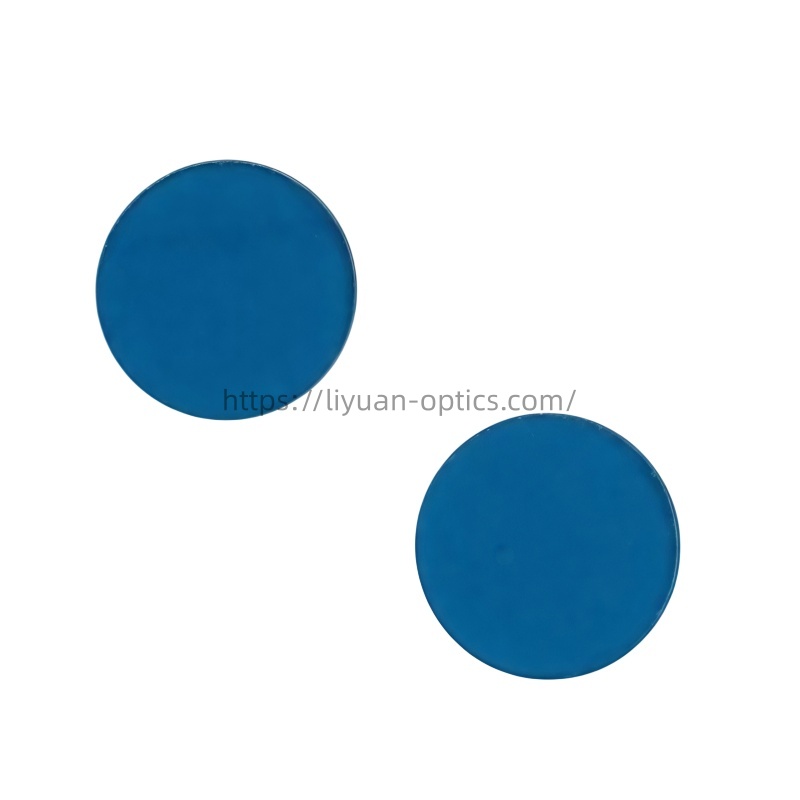
| Characteristics: | QB16 QB17 QB18 QB19 QB21 Blue Glass | | Type: | Selective Absorption Type Glass | | Color: | Blue | | Minimum Transmissivity(%): | See Technical Requirements Table below | | Shape : | Round or customized* | | Dimension(in mm): | Customized** | | Thickness(mm): | 2mm or Customized*** | | Material: | QB16 QB17 QB18 QB19 QB21 Blue Glass | | Spectral range: | 380-1100nm | Remark:
* Shape: Rectangle, Square or customized.
**Common for 86x86mm, 80x80mm, max. 300x300mm
** Optional thickness: 0.21、0.3、0.55、0.7、1.0、1.1、2.0、3.0mm…etc. |
|
QB Blue Glass Characteristics:
| 1. Basic Characteristics Table |
| Type | Thickness (mm) | A[2856K] | D65 | Chemical Stability | ND | α×10⁻⁷ (/℃) | Tg(℃) | Ts (℃) | S |
| x | y | Y | x | y | Y | DA | DW |
| QB16 | 2 | 0.43 | 0.411 | 82.4 | 0.3 | 0.327 | 84.7 | 6 | 5 | 1.52 | 100 | 421 | 463 | 2.64 |
| QB17 | 2 | 0.424 | 0.417 | 71.4 | 0.299 | 0.334 | 74 | 6 | 5 | 1.515 | 90 | 490 | 555 | 2.6 |
| QB18 | 2 | 0.4 | 0.413 | 75.2 | 0.274 | 0.315 | 78.3 | 1 | 3 | 1.518 | 90 | 490 | 555 | 2.5 |
| QB19 | 2 | 0.247 | 0.25 | 12.2 | 0.175 | 0.137 | 15.6 | 1 | 3 | 1.477 | 93 | 428 | 520 | 2.25 |
| QB21 | 2 | 0.345 | 0.439 | 62.1 | 0.244 | 0.326 | 68.8 | 6 | 5 | 1.535 | 100 | 421 | 463 | 2.86 |
| 2. Technical Indexes Table | | | |
| Type | Thickness (mm) | 400(nm) | 420(nm) | 450(nm) | 500(nm) | 540(nm) | 650(nm) | 700(nm) | 800(nm) | 1000(nm) | Bubble | Stripe | Stress |
| QB16 | 2 | ≥88.3 | – | – | ≥87.9 | – | 64.9~72.8 | – | 33.3~48.1 | – | D | 3C | 3 |
| QB17 | 2 | – | – | ≥69.7 | – | – | – | 27.7~44.0 | – | ≤10.1 | D | 3C | 3 |
| QB18 | 2 | – | ≥88.5 | – | – | 80.0~87.7 | – | 25.3~59.3 | – | – | C | 3C | 3 |
| QB19 | 2 | ≥70.0 | – | – | – | 560 ≥10.0 | 620≤3.0 | ≤13.0 | – | – | D-C | 4 | 3 |
| QB21 | 2 | 360 ≥50.0 | – | – | ≥83.0 | – | 680≤4.5 | – | – | – | C | 3C | 4 |
What is typical application for QB16-QB21 Blue glass?
| Application Area | Specific Use Cases | Primary Function |
| Digital Imaging & Consumer Electronics | Digital cameras, action cameras, car dashcams, security surveillance cameras | Eliminate color shift and noise; enhancing image sharpness and color fidelity |
| Industrial Machine Vision | Food sorting/ripeness detection, automated optical inspection (AOI) systems | Improve detection accuracy |
| Biomedical & Life Sciences | Confocal fluorescence microscopy, flow cytometry, phototherapy equipment | blocking auto-fluorescence background; ensuring precise wavelength control for bioassays |
| Optical Instrumentation & Testing | Color temperature adjustment instruments, spectrophotometers, optical lens assemblies, astronomical observation calibration | Optical filtering for precise wavelength control; correcting white balance; serving as core optical components in high-precision instruments |
| Specialized Optical Components | Laser protective windows, optical sensors, multi-spectral imaging systems, wavelength calibration standards | Selective light filtration to protect sensitive components; filtering specific spectral bands; ensuring stability and accuracy in harsh environments |
What is the difference between Color Filter Glass and Interference coated filter glass?
Color Filter Glass is an optical filter made by doping molten glass with metal oxides or rare-earth elements, causing it to absorb specific wavelengths and transmit others, which gives it its color. Interference Coated Filter Glass is a glass substrate with thin-film layers that uses optical interference to selectively transmit or reflect specific wavelengths. In short, interference filters are for high-precision applications, while color filter glass is often used for simpler, cost-effective filtering.
| (1) Interference Filters | (2) Colored Glass Filters |
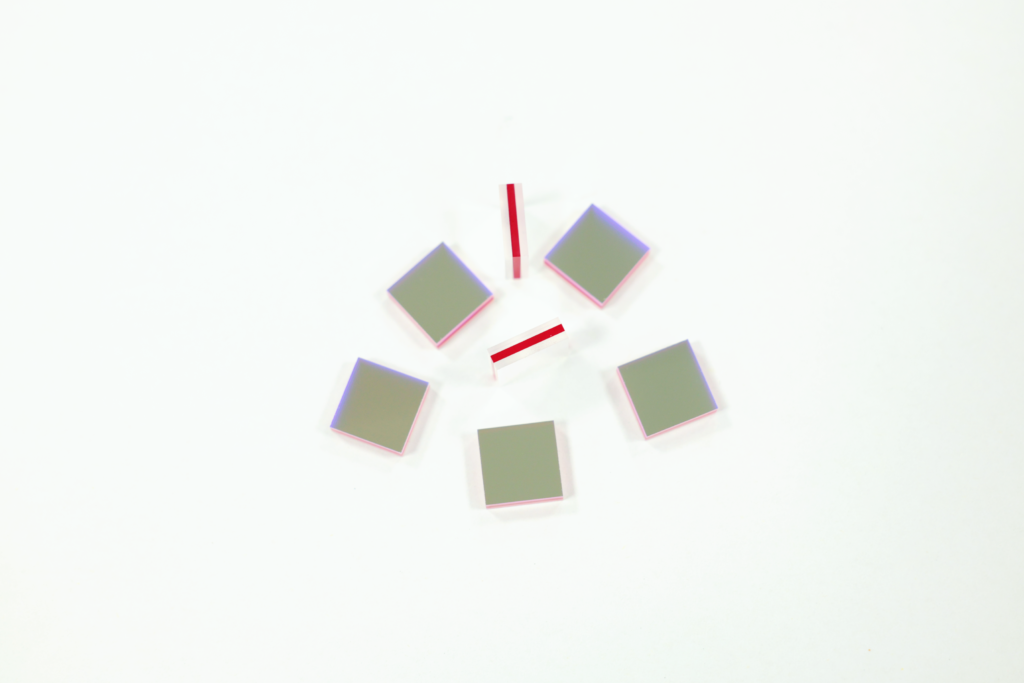
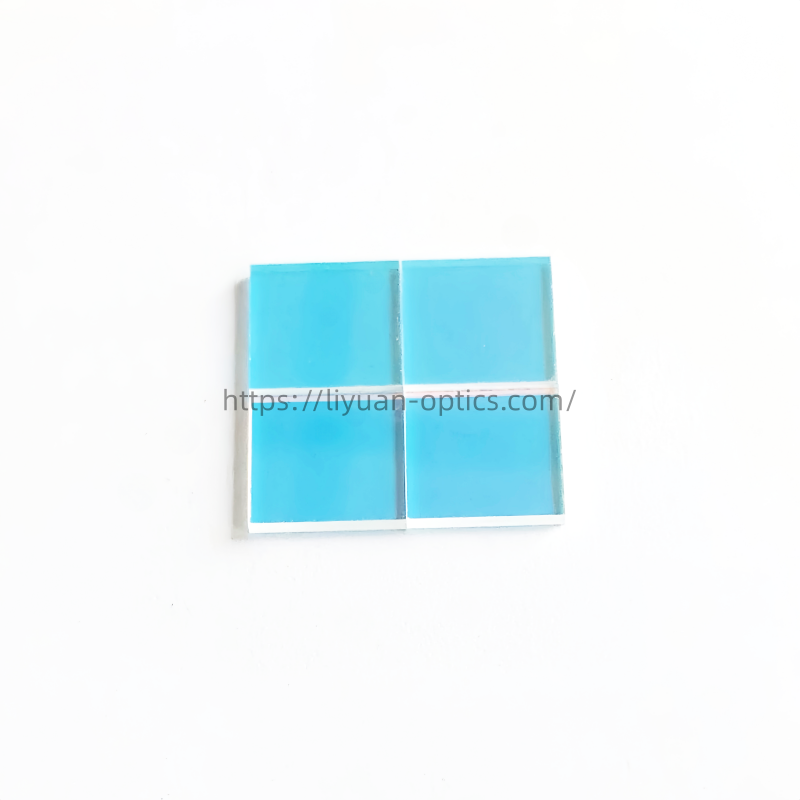
 | |
| Interference Filters, or thin-film filters, work by using wave interference. Multiple ultra-thin layers on a substrate are designed to reflect unwanted wavelengths, while constructively let the desire wavelengths to pass through. | Colored Glass Filters work by absorption. Dyes or metal ions inside the glass absorb unwanted light colors, allowing only the desired color light to pass through. They are more simple and only some certain wavelengths. |
Shenzhen Hengda Liyuan Optoelectronics introduced advanced optical technology that apply depositing nanomaterials through ion-assisted evaporation onto a multilayer hard film in a high vacuum environment which coating layer is firm and has good tightness, and small bandwidth drift. Liyuan optoelectronics have been focus on optical coating for more than 17 years and offer one-stop optical filters solution including Narrow Bandpass Filters, IR cut-off Filters, Longpass & Short Filters, Notch Filters, ND filters, Star filters and Optical sapphire block.
Shenzhen Hengda Liyuan Optoelectronics is focus on optical coating and optical filters solution, can provide but cut-off type glass and selective Absorption type glass.
- Cut-off Type Glass: Ultraviolet Glass, Golden(Yellow) Glass, Red Glass, Infrared Glass
- Selective Absorption Type Glass: Ultraviolet Glass, Violet Glass, Green Glass, Golden(Yellow)Glass, Red Glass, Infrared Glass, Protective Glass and Heat absorbing Glass.
QB1 QB2 QB3 QB4 QB5 Blue Glass, Selective Absorption Type Color Filter Glass
QB9 QB10 QB11 QB12 QB13 Blue Glass, Selective Absorption Type Filter Glass