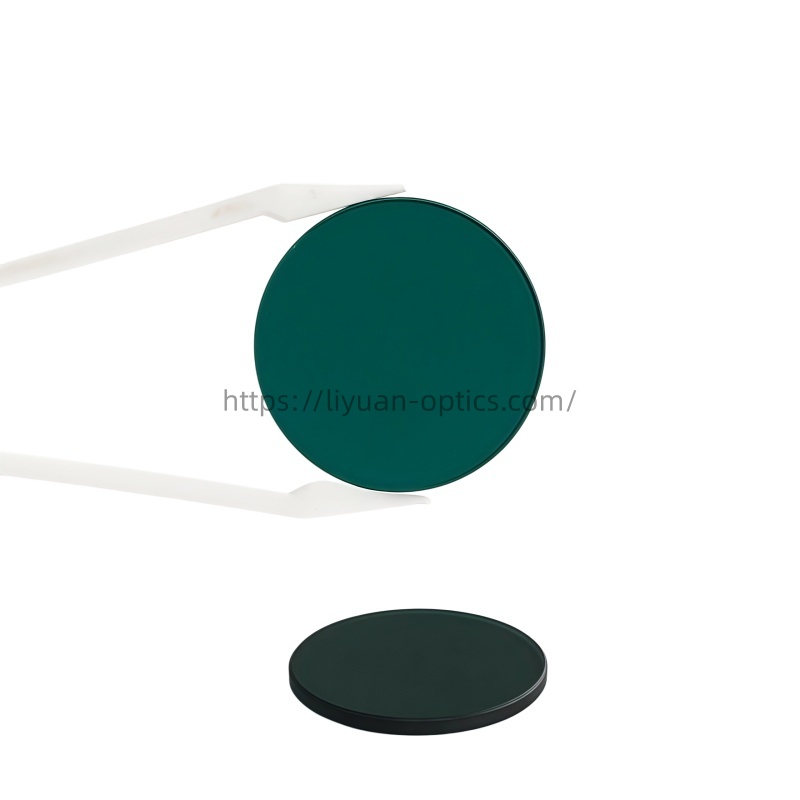
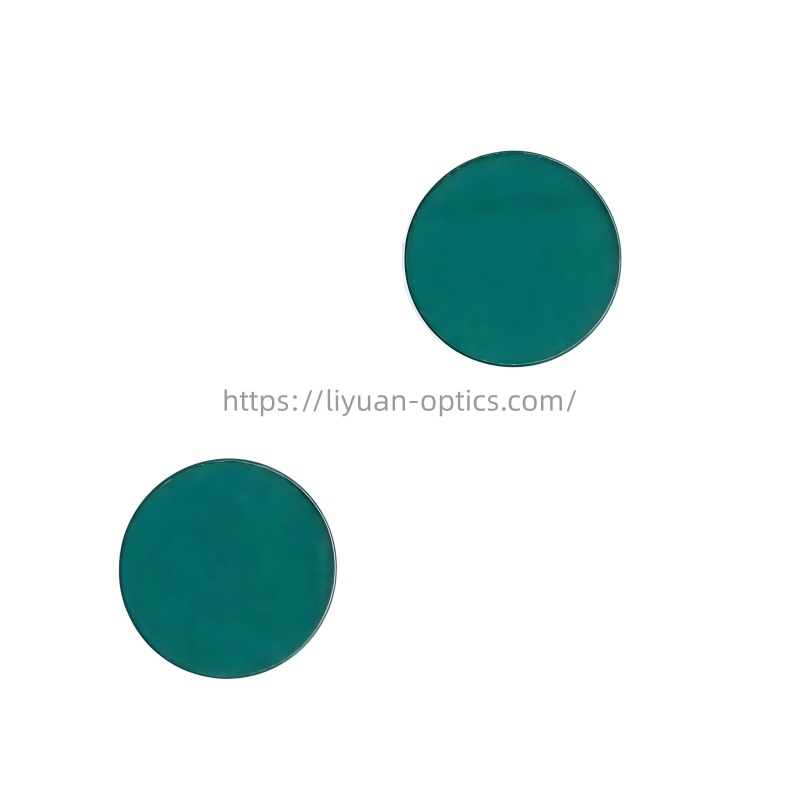
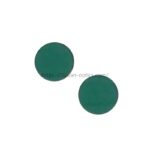
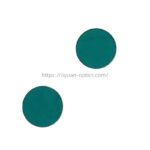
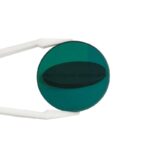
Product Descriptions:
| ||||||||||||||||||||
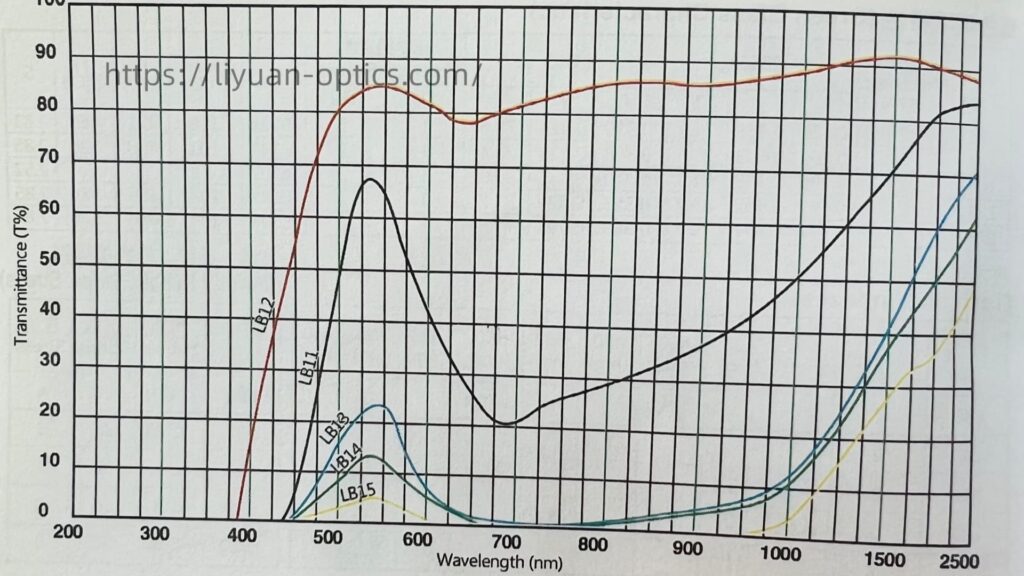
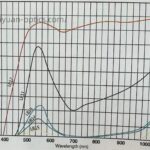
Measured Spectral Graph :
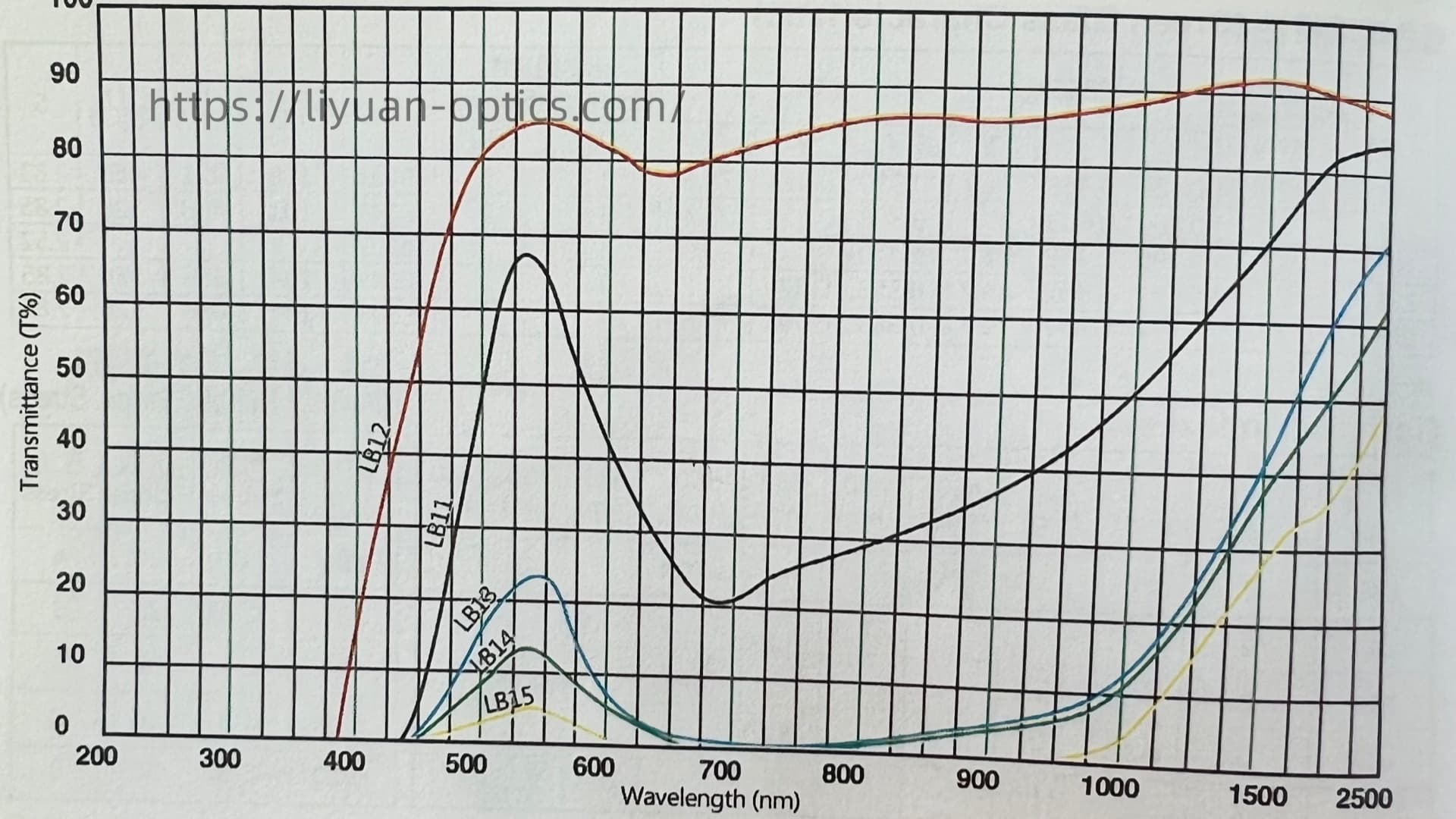 |
| Picture 1: LB11-LB15 Green Glass Spectral measurement |
LB Green Glass Characteristics:
| 1. Basic Characteristics Table | ||||||||||||||
| Type | Thickness (mm) | A[2856K] | D65 | Chemical Stability | ND | α×107 (/∘C) | Tg (∘C) | Ts (∘C) | S | |||||
| x | y | Y | x | y | Y | DA | DW | |||||||
| LB11 | 2 | 0.435 | 0.528 | 53 | 0.364 | 0.56 | 54.4 | 1 | 2 | 1.547 | 104 | 458 | 526 | 2.85 |
| LB12 | 2 | 0.463 | 0.433 | 87.3 | 0.342 | 0.388 | 84.9 | 1 | 4 | 1.536 | 95 | 534 | 606 | 2.73 |
| LB13 | 1 | 0.352 | 0.568 | 15.1 | 0.284 | 0.554 | 16.9 | 1 | 3 | 1.527 | 98 | 597 | 663 | 2.53 |
| LB14 | 1 | 0.369 | 0.576 | 8.9 | 0.307 | 0.588 | 9.8 | 1 | 3 | 1.527 | 98 | 597 | 663 | 2.53 |
| LB15 | 1 | 0.351 | 0.601 | 2.2 | 0.299 | 0.617 | 2.5 | 1 | 3 | 1.527 | 98 | 597 | 663 | 2.53 |
| 2. Technical Requirements Table | |||||||||||||
| Type | Thickness (mm) | 360(nm) | 420(nm) | 480(nm | 540(nm) | 550(nm) | 620(nm) | 650(nm) | 680(nm) | Model | Bubble | Stiripe | Stress |
| LB11 | 2 | – | ≤0.4 | – | ≥65.0 | – | – | – | 17.0~24.0 | LB11 | C-B | 3C | 3 |
| LB12 | 2 | ≤0.8 | – | – | – | ≥79.4 | – | ≥72.5 | – | LB12 | C-B | 3C | 3 |
| LB13 | 1 | – | – | ≤13.8 | 17.4~30.3 | – | ≤12.6 | – | – | LB13 | C-B | 4 | 3 |
| LB14 | 1 | – | – | ≤7.6 | 7.6~17.4 | – | ≤8.1 | – | – | LB14 | C-B | 4 | 3 |
| LB15 | 1 | – | – | ≤3.2 | ≥2.0 | – | ≤4.2 | – | – | LB15 | C-B | 4 | 3 |
Class Of Bubble, Stripe, Stress:
| Model | Bubble | Stiripe | Stress |
| LB11 | C-B | 3C | 3 |
| LB12 | C-B | 3C | 3 |
| LB13 | C-B | 4 | 3 |
| LB14 | C-B | 4 | 3 |
| LB15 | C-B | 4 | 3 |
Comparative Type List Colored Filter Glass:
| Model | Former USSR | SCHOTT | HOYA |
| LB11 | Ж3С9 | – | – |
| LB12 | Ж3С10 | – | G-545 |
| LB13 | Ж3С12 | – | – |
| LB14 | Ж3С13 | – | – |
| LB15 | Ж3С17 | – | – |
What is typical application for LB11-LB15 Green glass?
| Application Area | Specific Use Cases | Primary Function |
| Photography & Cinematography | Black-and-white film contrast enhancement, color correction filters for cameras, vintage lens green filters, landscape photography sky filters | Selectively transmit green wavelengths while blocking excess red/blue light; boost subject-background contrast; enhance sky and foliage detail in monochrome/color imaging |
| Optical Instruments & Metrology | Spectrophotometers, colorimeters, optical comparators, laser alignment systems, optical testing equipment | Isolate green spectral bands for accurate color measurement; block out-of-band noise to improve measurement precision; calibrate optical instrument response |
| Astronomical & Scientific Research | Astronomical observation green filters, solar observation filters, spectral analysis experiments, environmental monitoring optical sensors | Isolate specific green spectral lines for astronomical observation; filter atmospheric interference; enable precise spectral analysis in scientific research |
| Industrial & Scientific Equipment | Laser range finders, optical sights, particle detectors, industrial inspection systems | Block out-of-band noise to improve laser signal clarity; enhance target contrast in optical aiming; filter light for scientific experiments |
| Display & Projection Systems | Color separation filters for projectors, LED display color correction, stage lighting green filters, AR/VR optical components | Optimize green color balance in projection/display systems; create precise green lighting effects; improve color gamut accuracy in visual display devices |
What is the difference between Color Filter Glass and Interference coated filter glass?
| (1) Interference Filters | (2) Colored Glass Filters |
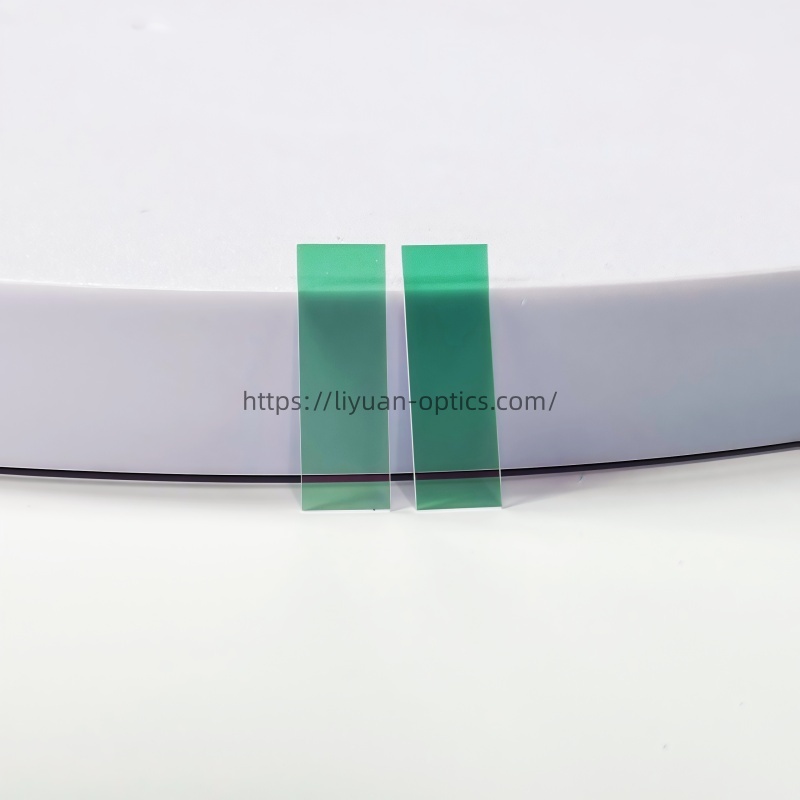 | 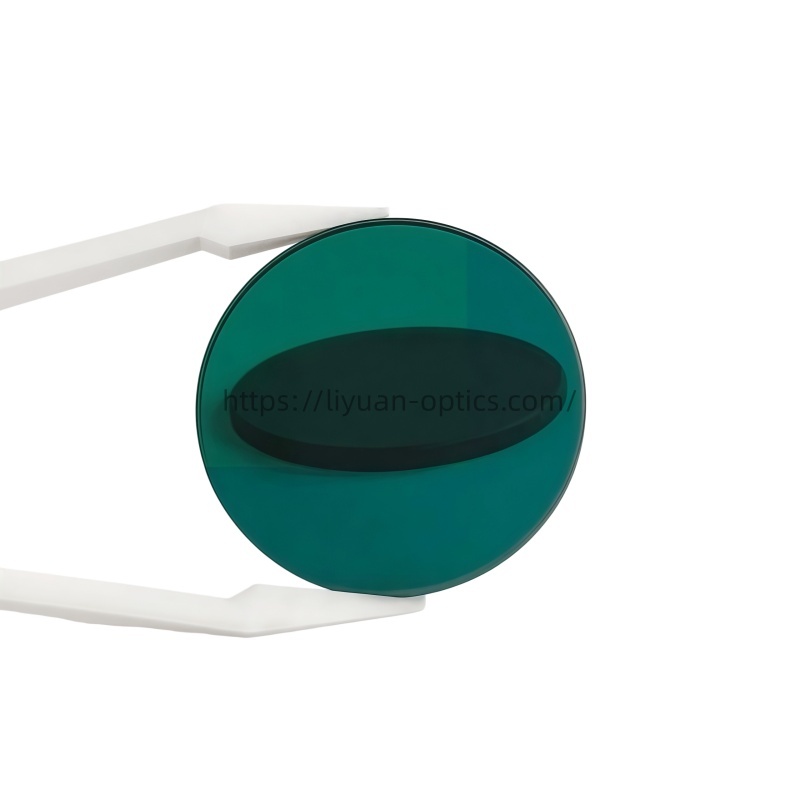 |
| Interference Filters, or thin-film filters, work by using wave interference. Multiple ultra-thin layers on a substrate are designed to reflect unwanted wavelengths, while constructively let the desire wavelengths to pass through. | Colored Glass Filters work by absorption. Dyes or metal ions inside the glass absorb unwanted light colors, allowing only the desired color light to pass through. They are more simple and only some certain wavelengths. |
Summary: Interference filters offer much sharper cut-offs and higher performance, allowing precise selection of very specific wavelengths.
Colored glass is generally more affordable, but with limit options and broader transmission bands.
In short, interference filters are for high-precision applications, while color filter glass is often used for simpler, cost-effective filtering.
Shenzhen Hengda Liyuan Optoelectronics is focus on optical coating and optical filters solution, can provide but cut-off type glass and selective Absorption type glass.
- Cut-off Type Glass: Ultraviolet Glass, Golden(Yellow) Glass, Red Glass, Infrared Glass
- Selective Absorption Type Glass: Ultraviolet Glass, Violet Glass, Green Glass, Golden(Yellow)Glass, Red Glass, Infrared Glass, Protective Glass and Heat absorbing Glass.
LB1 LB2 LB3 LB4 Green Glass, Selective Absorption Type Glass
LB6 LB7 LB8 LB9 LB10 Green Glass, Selective Absorption Type Color Filter Glass
LB16 LB17 LB18 LB19 Green Glass, Selective Absorption Type Color Filter Glass