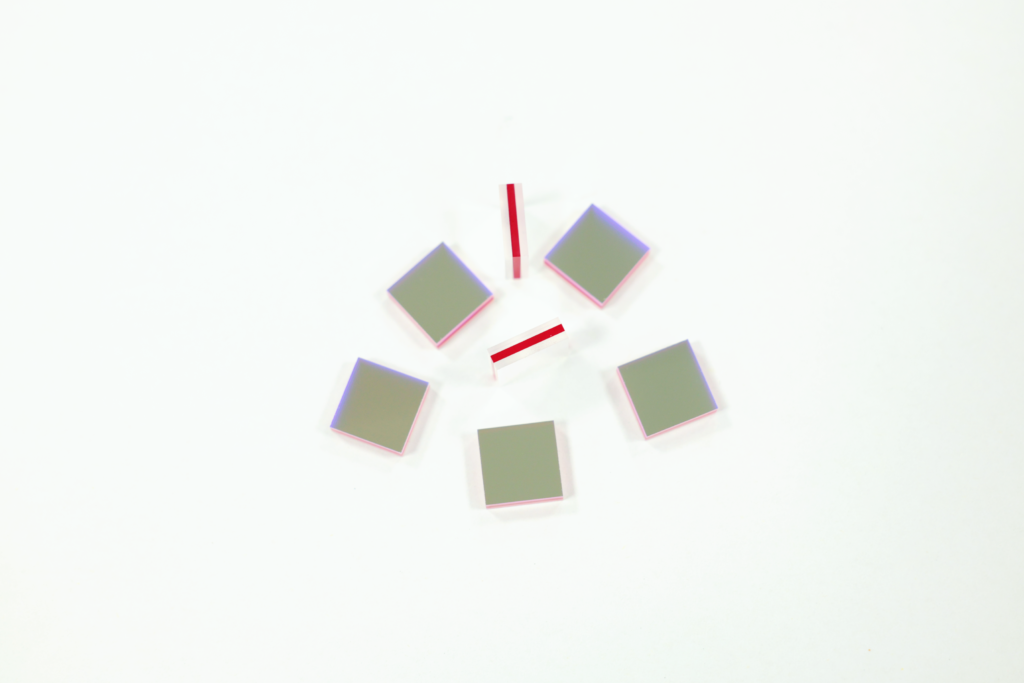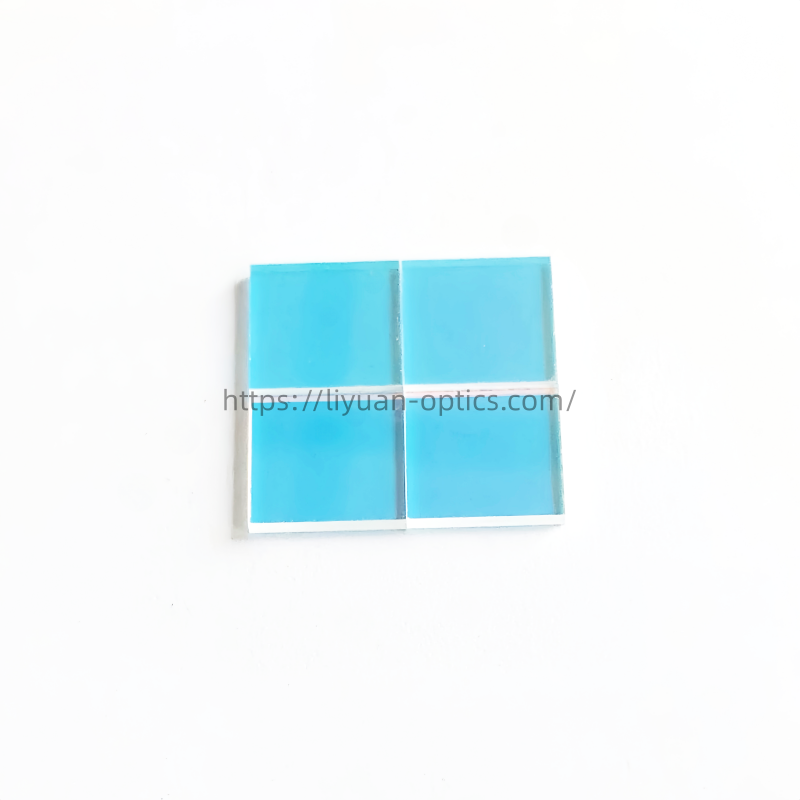

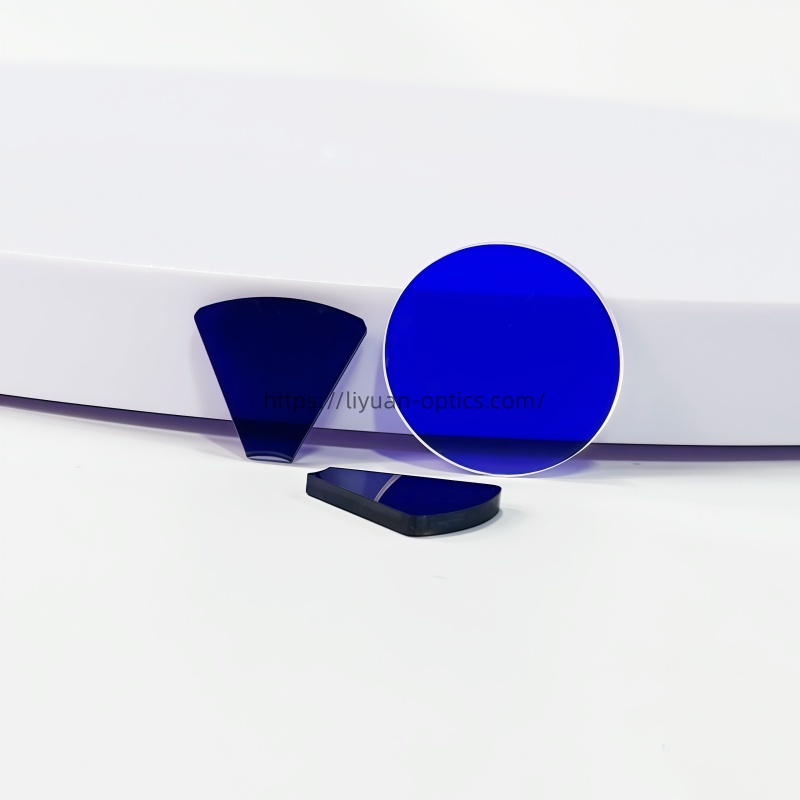
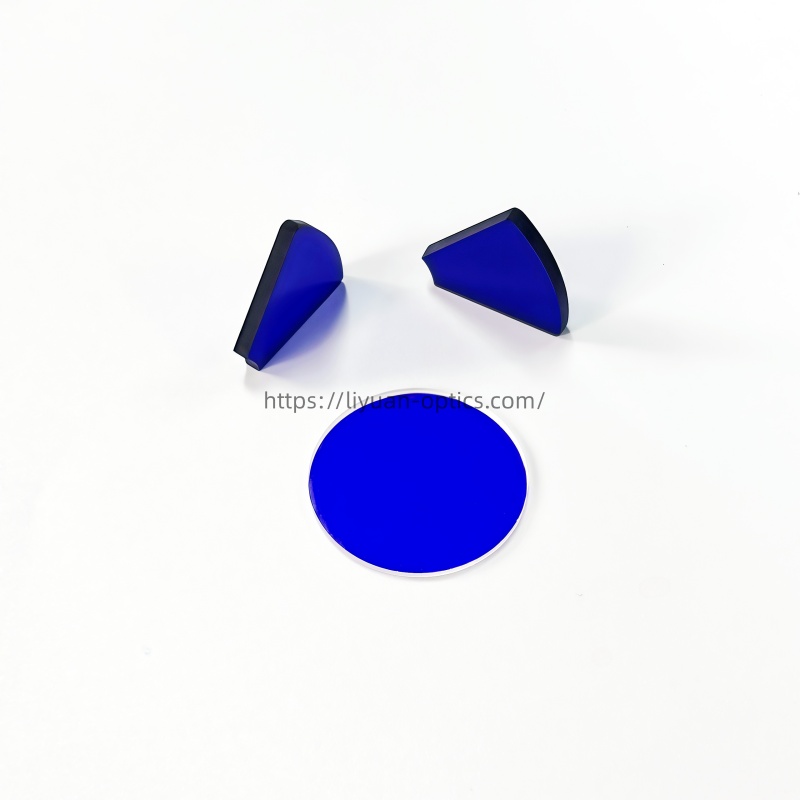
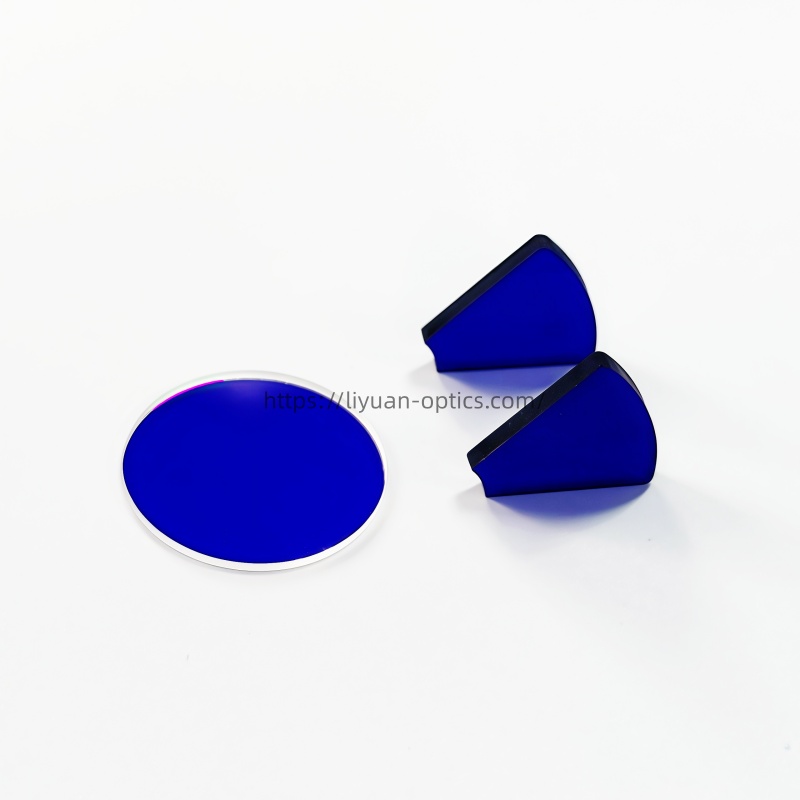
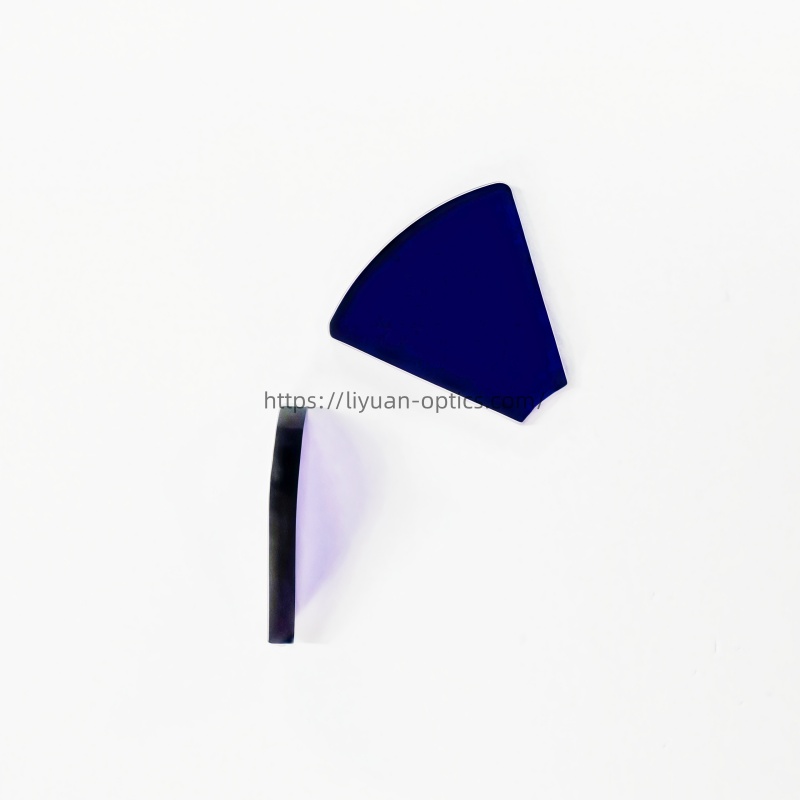
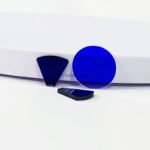
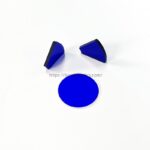

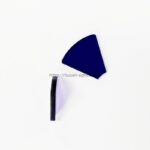
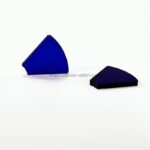
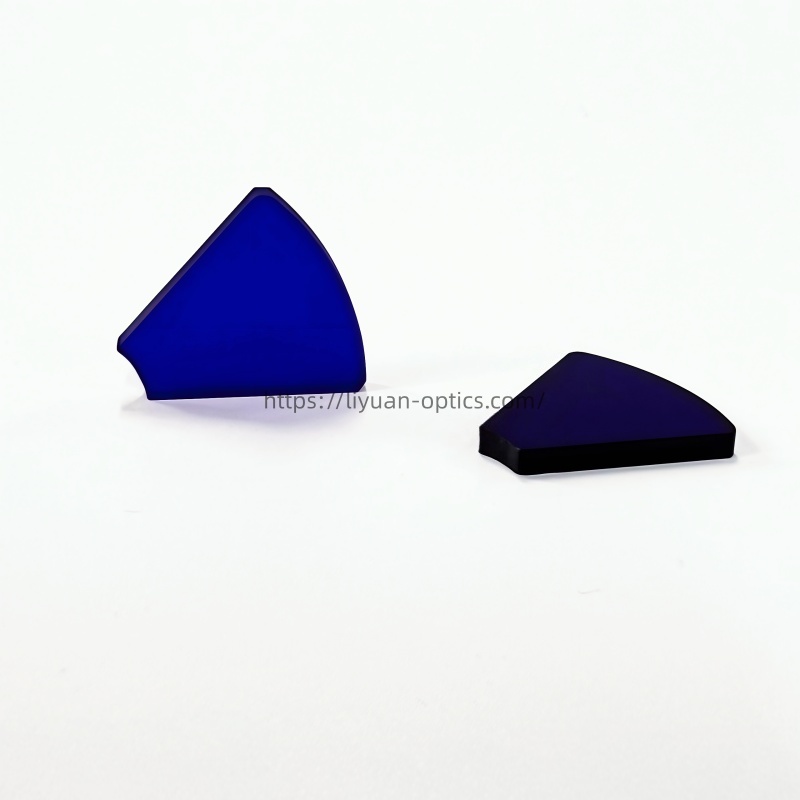
1.Product Descriptions:
| ||||||||||||||||||||
2.ZB1 Violet Glass Characteristics:
| 1. Basic Characteristics Table | ||||||||||||||
| Type | Thickness (mm) | A[2856K] | D65 | Chemical Stability | ND | α×10⁷(/℃) | Tg(℃) | Ts(℃) | S | |||||
| x | y | Y | x | y | Y | DA | DW | |||||||
| ZB1 | 2 | 0.519 | 0.018 | 0.2 | 0.16 | 0.016 | 0.6 | 1 | 3 | 1.524 | 29 | 519 | 589 | 2.53 |
| ZB2 | 2 | 0.158 | 0.02 | 0.2 | 0.16 | 0.017 | 0.7 | 1 | 2 | 1.495 | 58 | 551 | 655 | 2.40 |
| ZB3 | 2 | 0.165 | 0.011 | 0.1 | 0.16 | 0.01 | 0.2 | 1 | 2 | 57 | 538 | 636 | 2.40 | |
| 2. Technical Indexes Table | ||||||||||||
| Type | Thickness (mm) | 300(nm) | 360(nm) | 400(nm) | 480(nm) | 700(nm) | 710(nm) | 720(nm) | 800(nm) | Bubble | Stripe | Stress |
| ZB1 | 2 | ≥70.0 | ≤6.0 | ≤4.0 | C-B | 4 | 3 | |||||
| ZB2 | 2 | ≥31.0 | ≥78.2 | ≤3.7 | ≤9.2 | ≥80.4 | C-B | 4 | 3 | |||
| ZB3 | 2 | ≥18.0 | ≥78.2 | ≤0.2 | ≤10.0 | ≥80.4 | C-B | 4 | 4 | |||
3.What is typical application for ZB1 Violet Glass?
| Application Area | Specific Use Cases | Primary Function |
| Biomedical & Fluorescence Imaging | Fluorescence microscopy, flow cytometry, and fluorescence detection systems | Serves as an excitation filter; transmits violet/UV excitation light while blocking stray visible light to improve signal-to-noise ratio. |
| Optical Instruments & Spectroscopy | Colorimeters, spectrophotometers, and optical measurement devices | Selectively transmits violet-blue light, suppresses green/red light interference, and isolates target spectral components. |
| Machine Vision & Industrial Inspection | Product quality inspection, color sorting, and automated optical inspection (AOI) | Filters out unwanted background light; enhances contrast of features sensitive to violet/blue wavelengths in complex lighting environments. |
| Stage Lighting & Photographic Filters | Stage lights, special effect photography, and studio lighting systems | Produces colored lighting effects; modulates the color temperature and tone of light sources. |
| UV/Visible Analytical Testing | UV-Vis spectrometers, anti-counterfeiting detection, and material analysis | Acts as a pre-filter for UV excitation sources; isolates violet light for fluorescence excitation and UV-related analytical measurements. |
| Educational & Scientific Research | Teaching optical experiments, light transmission demonstrations, and laboratory optics | Demonstrates color filtration principles; serves as a basic component in optical teaching kits. |
4.What is the difference between Color Filter Glass and Interference coated filter glass?
| (1) Interference Filters | (2) Colored Glass Filters |
 |  |
| Interference Filters, or thin-film filters, work by using wave interference. Multiple ultra-thin layers on a substrate are designed to reflect unwanted wavelengths, while constructively let the desire wavelengths to pass through. | Colored Glass Filters work by absorption. Dyes or metal ions inside the glass absorb unwanted light colors, allowing only the desired color light to pass through. They are more simple and only some certain wavelengths. |
- Cut-off Type Glass: Ultraviolet Glass, Golden(Yellow) Glass, Red Glass, Infrared Glass
- Selective Absorption Type Glass: Ultraviolet Glass, Violet Glass, Green Glass, Golden(Yellow)Glass, Red Glass, Infrared Glass, Protective Glass and Heat absorbing Glass.
ZWB1 UV Filter, Selective absorption type, 313nm Ultraviolet Glass
ZWB2 UV Filter, Selective absorption type, 365nm Ultraviolet Glass
ZWB3 UV Filter, Selective absorption type, 334nm Ultraviolet Glass