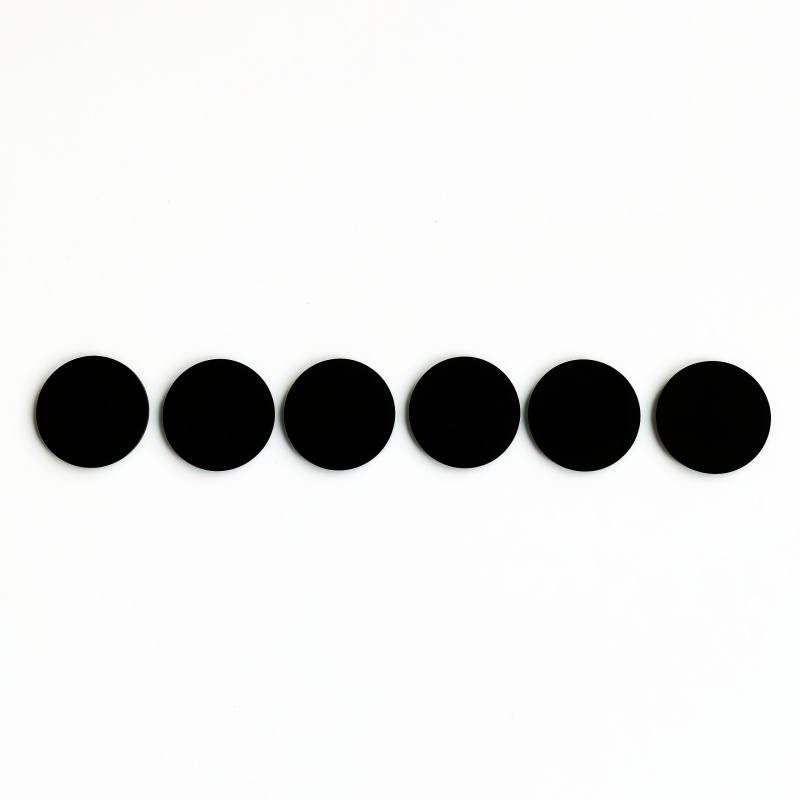
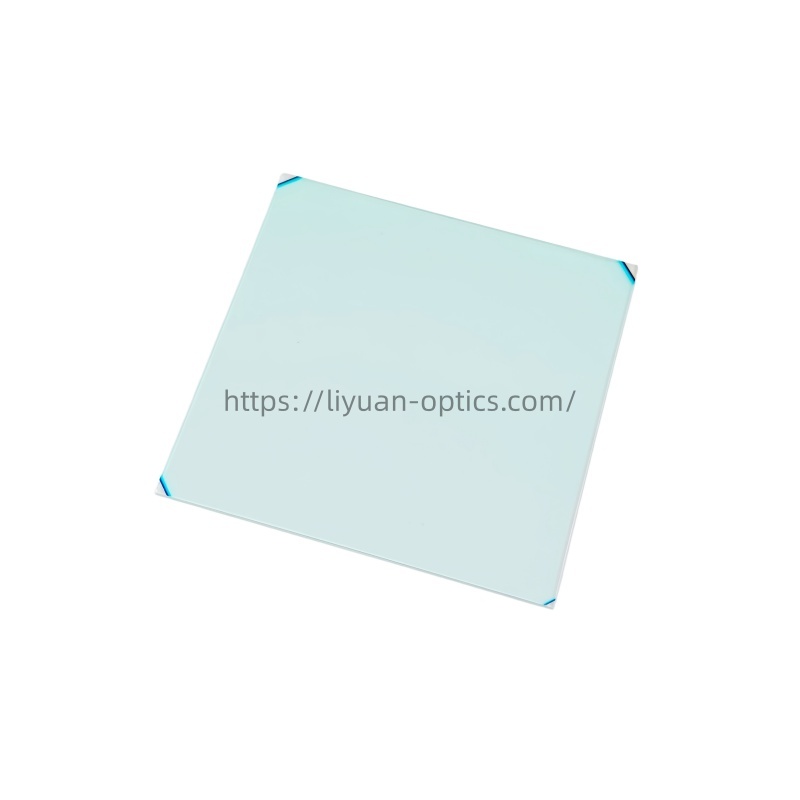
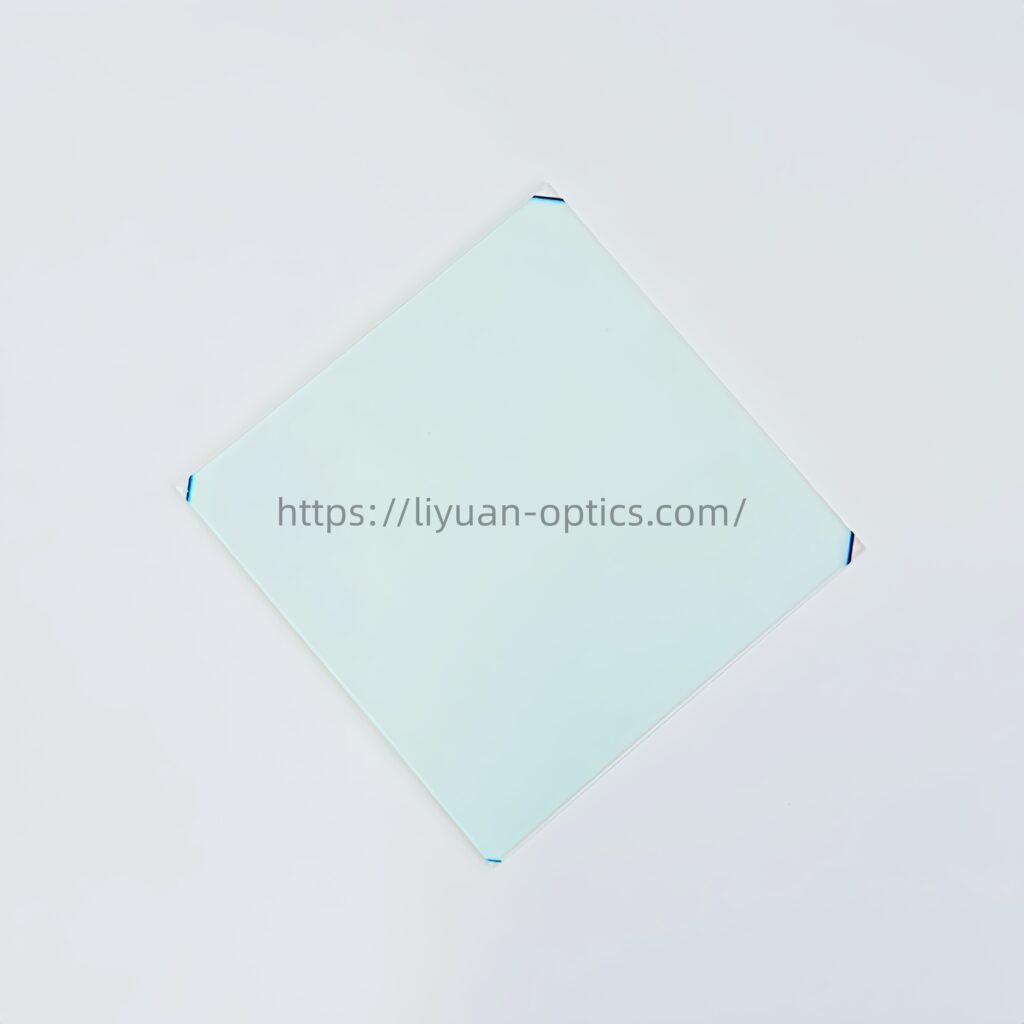
1. Product Descriptions:
| Characteristics: | ZWB1 UV Filter | | Type: | Selective Absorption Type Glass | | Center Wavelength(CWL): | 313nm | | Peak Transmittance(%) : | ≥81% | | Shape: | Round* | | Color: | Black | | Surface Quality: | 60/40 scratch-dig | | Dimension(mm): | customized | | Thickness(mm): | 1mm or 2mm or customized** | | Substrate: | Absorptive Color Filter Glass. | | Remark: * Option: Rectangle,Square or customized.
** Optional thickness: 0.55/0.7/1/2/3mm |
|
2.Ultraviolet Glass Characteristics:
| 1. Basic Characteristics Table |
| Type | Thickness (mm) | Color Coordinates (A/2856K) | Color Coordinates | Chemical Stability | α×10⁻⁷ | ND | Tg (℃) | Ts (℃) | S |
| (D65) |
| | x | y | Y | x | y | Y | Dₐ | Dw |
| ZWB1 | 1 | 0.734 | 0.266 | 0.1 | 0.726 | 0.262 | 0 | 4 | 4 | 94 | 1.557 | 529 | 588 | 2.87 |
| ZWB2 | 1 | 0.532 | 0.171 | 0.9 | 0.231 | 0.032 | 0.4 | 2 | 2 | 97 | 1.52 | 515 | 589 | 2.65 |
| ZWB3 | 2 | 0.711 | 0.256 | 0.3 | 0.538 | 0.176 | 0.1 | 2 | 3 | 85 | 1.526 | 527 | 616 | 2.63 |
| 2. Technical Requirements Table |
| Type | Thickness (mm) | 254 (nm) | 280(nm) | 313(nm) | 334(nm) | Bubble | Stripe | Stress |
| ZWB1 | 1 | | ≥50.0 | ≥81.0 | | C | 4 | 4 |
| ZWB2 | 1 | | | ≥38.0 | | C | 4 | 3 |
| ZWB3 | 2 | ≥50.0 | | | ≥86.0 | C | 4 | 4 |
3.Measured Spectral Graph:
 |
| Picture 1: ZWB1 Black Glass Graph measurement |
4.What is ZWB1 black glass and its typical application?
ZWB1 black glass is a typical absorptive filter. It strongly absorbs visible light while allowing specific 313nm ultraviolet light with short-band to pass through efficiently.
Typical application is showed as below:
| Application Area | Specific Uses |
| Medical & Beauty | Skin analysis devices, phototherapy equipment, beauty instruments |
| Scientific Instruments | Fluorescence analyzers, gel imaging systems, capillary electrophoresis |
| Industrial Inspection | UV curing lamps, fluorescent flaw detection, NDT (non-destructive testing) |
| Forensics & Security | Currency verification, document authentication, forensic evidence detection |
| Photography | UV photography, special effects |
| Lighting | High-pressure mercury lamp envelopes |
| Geological Exploration | UV mineral analysis |
5.What is the difference between Color Filter Glass and Interference coated filter glass?
Interference filters offer much sharper cut-offs and higher performance, allowing precise selection of very specific wavelengths.
Colored glass is generally more affordable, but with limit options and broader transmission bands.
In short, interference filters are for high-precision applications, while color filter glass is often used for simpler, cost-effective filtering.
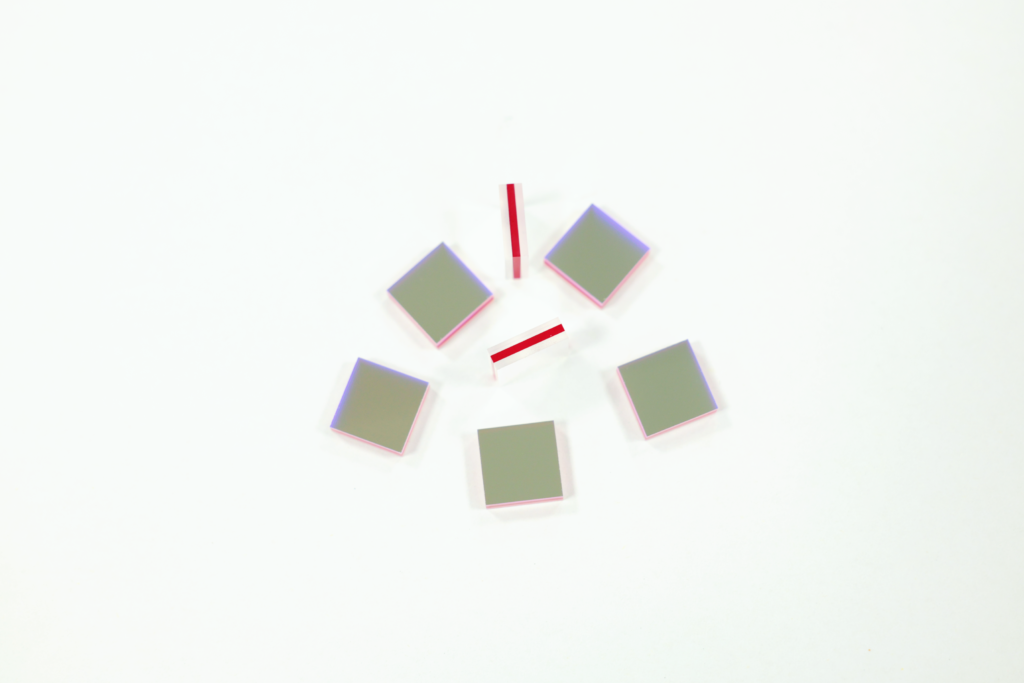
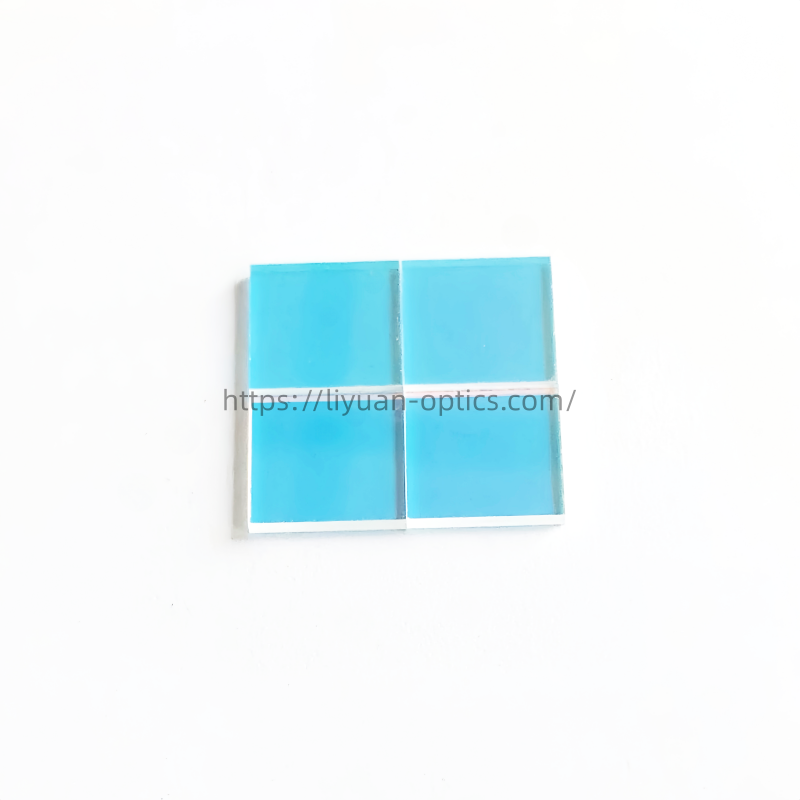
| (1) Colored Glass Filters | (2) Interference Filters |
|  |
| Color Glass Filters work by absorption. Dyes or metal ions inside the glass absorb unwanted light colors, allowing only the desired color light to pass through. They are more simple and only some certain wavelengths. | Interference Filters, or thin-film filters, work by using wave interference. Multiple ultra-thin layers on a substrate are designed to reflect unwanted wavelengths, while constructively let the desire wavelengths to pass through. |
Shenzhen Hengda Liyuan Optoelectronics is focus on optical coating and optical filters solution, can provide but cut-off type glass and selective Absorption type glass.
- Cut-off Type Glass: Ultraviolet Glass, Golden(Yellow) Glass, Red Glass, Infrared Glass
- Selective Absorption Type Glass: Ultraviolet Glass, Violet Glass, Green Glass, Golden(Yellow)Glass, Red Glass, Infrared Glass, Protective Glass and Heat absorbing Glass.
ZWB2 Ultraviolet Glass, Selective Absorption Type Glass
ZWB3 UV Filter, Selective absorption type, 334nm Ultraviolet Glass