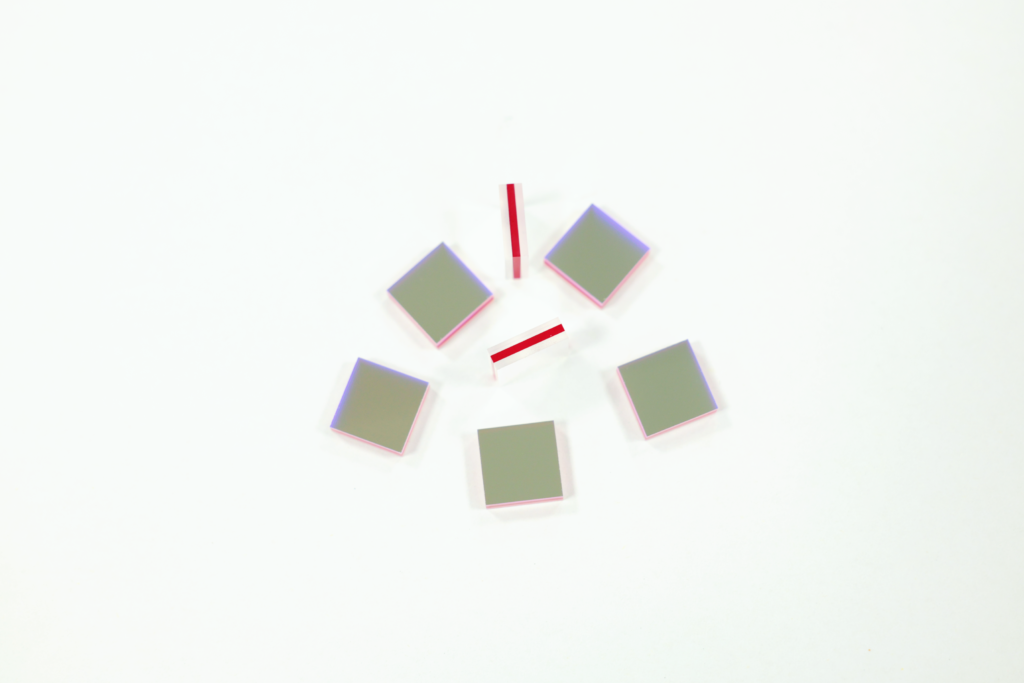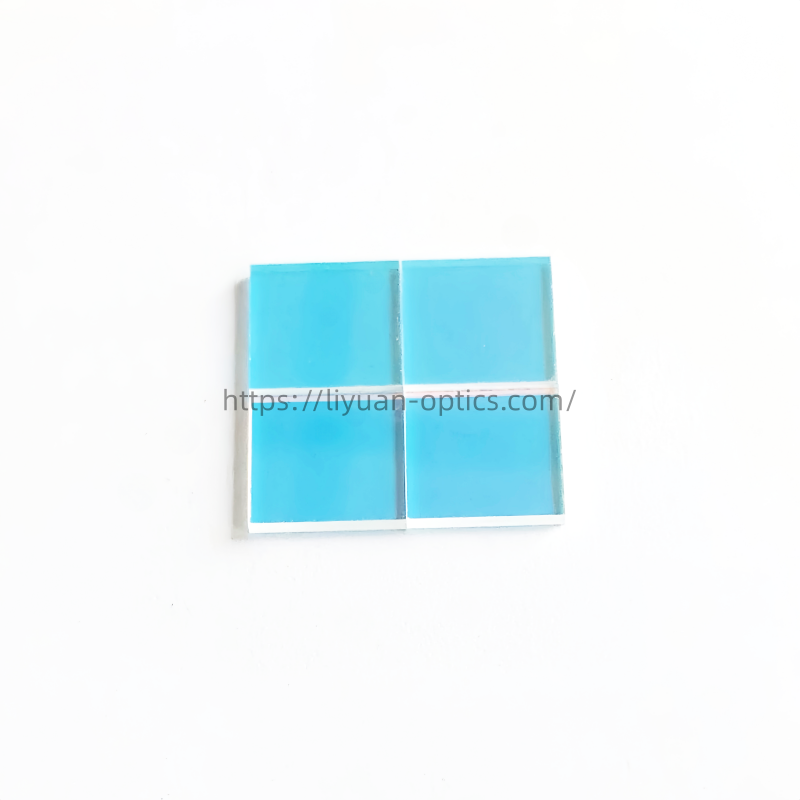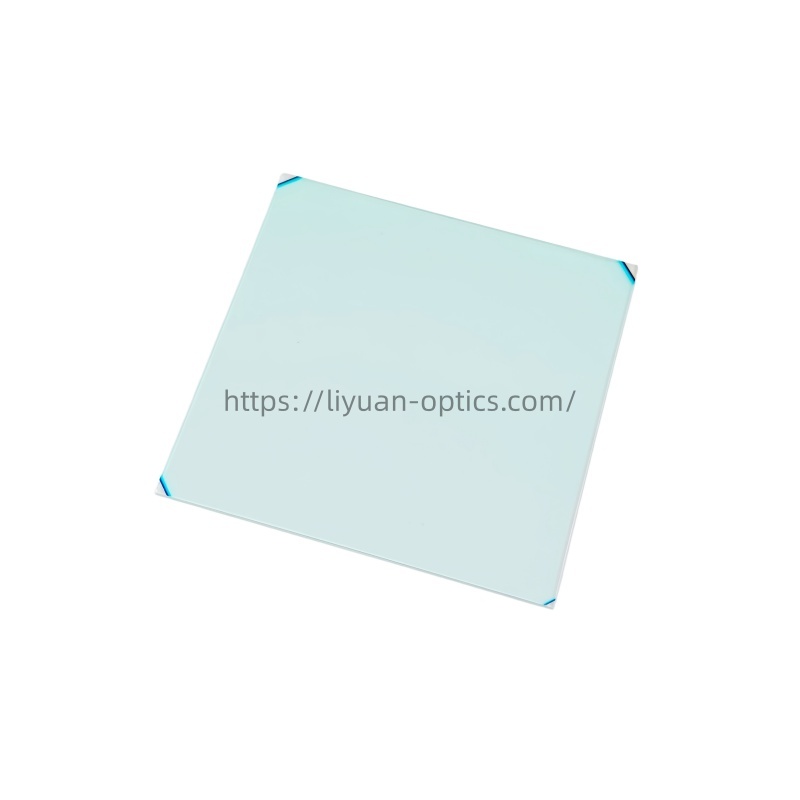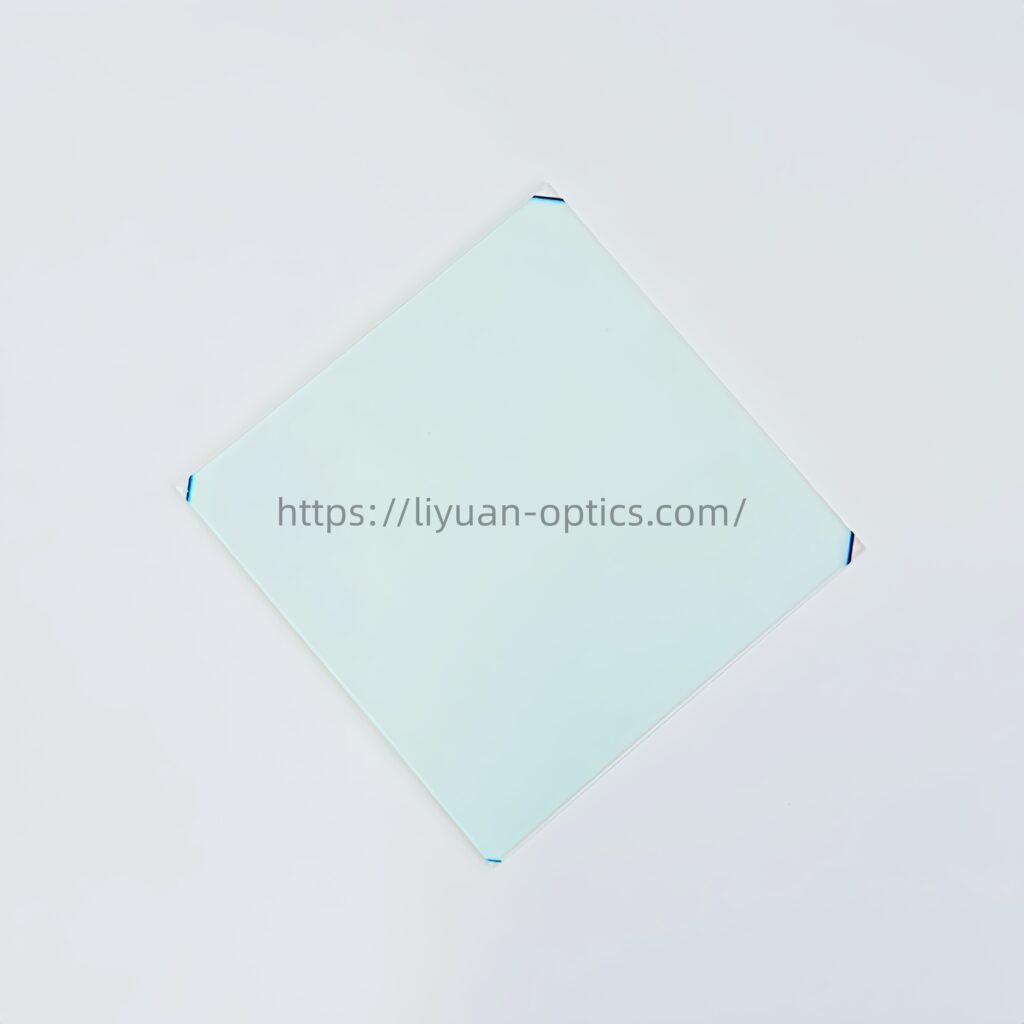


1.Product Descriptions:
| Characteristics: | Infrared Transmission Acrylic Filter |
| Type: | Longpass Filter |
| Cut-off Wavelength(in mm): | 700nm,710nm,740nm,780nm |
| Peak Transmittance(%) : | >90% |
| Color: | Translucent Black or black |
| Shape: | Square or specified |
| Custom Processing: | Custom Shape, Hole Drilling, Step Structure, Adhesive Backing, Hard Coating |
| Surface Quality: | 60/40 scratch-dig |
| Dimension(mm): | Specified** |
| Thickness(mm): | 0.21-3mm |
| Substrate: | Ultra-clear glass,K9,BK7,B270,D2637T, Quartz Glass(Fused Silica) or other specified |
| Remark: (1)Spectral range:400-1200nm (2) Size customized: 86x86mm, 80x80mm, other can customized, max. 300x300mm (3) Thickness available: 0.21、0.3、0.55、0.7、1.0、1.1、1.5、1.8、2.0、3.0mm, etc. | |
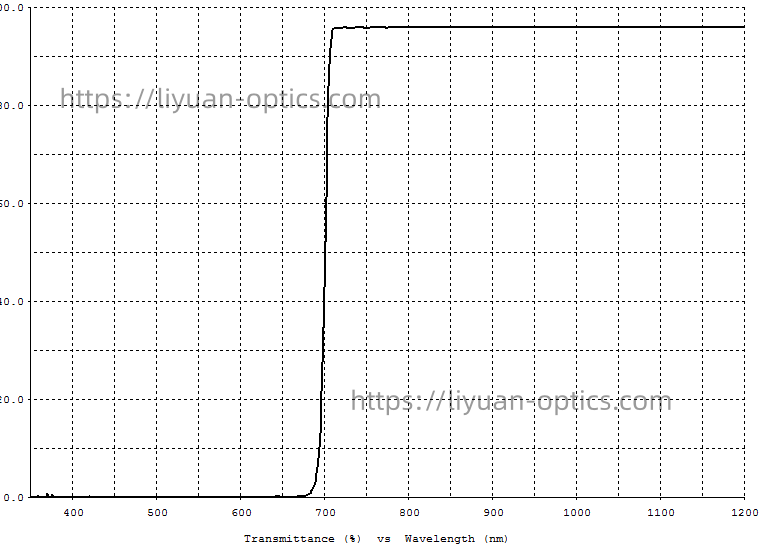
2. Measured Spectral curve
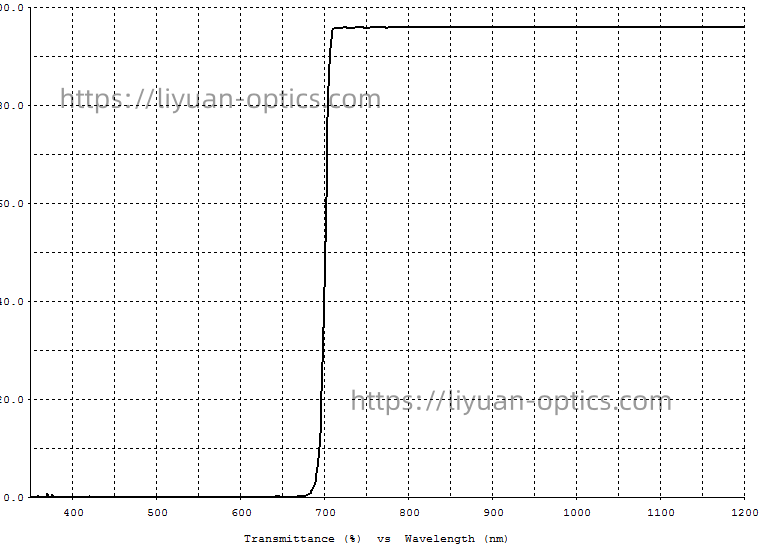 |
Picture 1: LP700nm Spectral Curve |
3.What is typical application for Infrared Transmission Acrylic Filters?
When selecting an Infrared Transmission Acrylic Filter, key parameters include:
- Cut-on wavelength: the wavelength at which the filter begins transmitting IR, typically defined at 50% transmittance.
- Transmittance: the percentage of light passing through the target IR band, where >85% ensures strong signal and high sensitivity.
- Optical density: the ability to block visible light, with higher OD providing more thorough rejection to prevent IR interference.
- Angle of incidence (AOI): the light incidence angle, where interference filters are angle-sensitive and AOI changes cause wavelength shift.
- Spectral range: the effective wavelength interval covering both blocking and transmission regions.
- Substrate & Physical dimensions: material type, size, and thickness.
- Environmental durability: resistance to aging, temperature, and humidity for long-term spectral stability.
- Surface quality: expressed as scratch/dig, where higher quality reduces scattering loss, especially critical for imaging and precision sensing applications.
Shenzhen Hengda Liyuan Optoelectronics introduced advanced optical technology that apply depositing nanomaterials through ion-assisted evaporation onto a multilayer hard film in a high vacuum environment which coating layer is firm and has good tightness, and small bandwidth drift. Liyuan optoelectronics have been focus on optical coating for more than 17 years and offer one-stop optical filters solution including Narrow Bandpass Filters, IR cut-off Filters, Longpass Filters, Shortpass Filters, Notch Filters, ND filters, Star filters and Optical sapphire block.