
1.Product Descriptions:
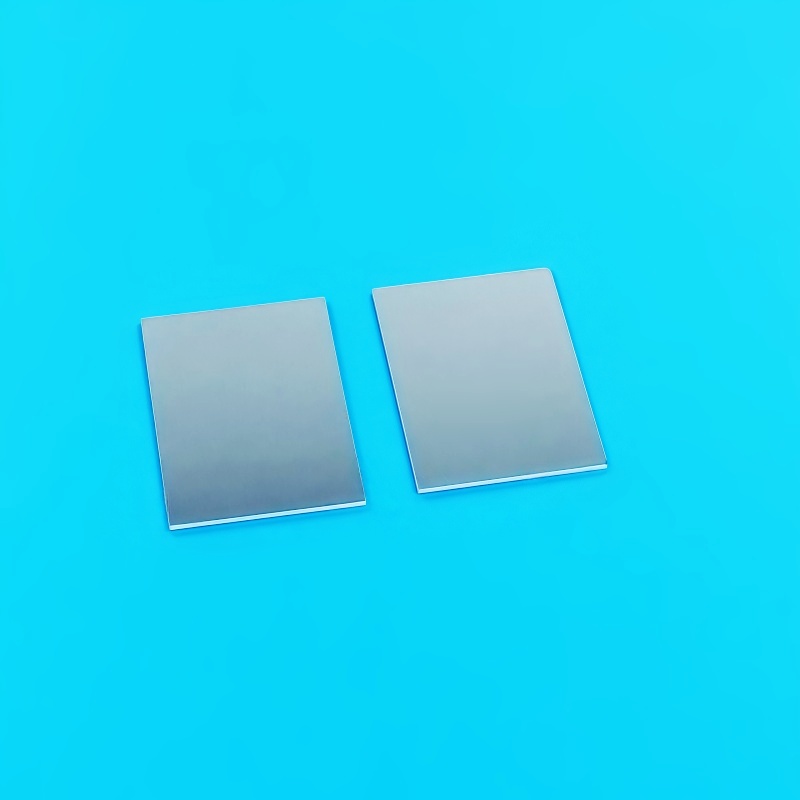
| Characteristics: | Aluminum-Coated Mirror |
| Type: | Reflective mirror |
| Reflectance : | >95% |
| Shape: | Round, Square, or custom specified |
| Angle of Incidence: | 0-45° or specified |
| Surface Quality: | 60/40 scratch-dig |
| Coating: | Metal Coating |
| Dimension(mm): | Specified** |
| Thickness(mm): | 0.5-2mm |
| Substrate: | Ultra-clear glass,K9,BK7,B270,D2637T, Quartz Glass(Fused Silica) or other specified. |
| Custom Processing: | Laser cutting, chamfering, special shapes, and drilling available upon request. |
| Remark: Spectral range:380-1100nm *Customized capability: 380-2500nm, stock for 10nm intervals. **Common for 86x86mm, 80x80mm, other can customized, max. 300x300mm *** Thickness available: 0.21、0.3、0.55、0.7、1.0、1.1、1.5、1.8、2.0、3.0mm, etc. | |
2.What is an Aluminum-Coated Mirror?
An Aluminum-Coated Mirror is an optical reflective component created by depositing a thin film of metallic aluminum onto a precisely polished substrate. Aluminum is the most common and widely used metallic mirror coating, offering broad spectral coverage from ultraviolet to near-infrared with excellent cost-effectiveness .
3.What is typical application for Aluminum-Coated Mirrors?
When selecting an Aluminum-Coated Mirrors, the Reflectance & Spectral Range will be the most critical parameter, determining the mirror’s efficiency in your wavelength region. Secondly, coating type selection, including bare aluminum, protected aluminum, enhanced aluminum. Third, glass substrate material. e.g., fused silica, BK7. Forth, surface quality. Usually, imaging systems choose 40-20 or better, laser systems choose 20-10 or better to minimize scatter. Fifth, Dimensions & Shape. Sixth, Environmental & Durability Factors, etc.
Shenzhen Hengda Liyuan Optoelectronics introduced advanced optical technology that apply depositing nanomaterials through ion-assisted evaporation onto a multilayer hard film in a high vacuum environment which coating layer is firm and has good tightness, and small bandwidth drift. Liyuan optoelectronics have been focus on optical coating for more than 17 years and offer one-stop optical filters solution including Narrow Bandpass Filters, IR cut-off Filters, Longpass & Short Filters, Notch Filters, ND filters, Star filters and Optical sapphire block.