
1.Product Descriptions:
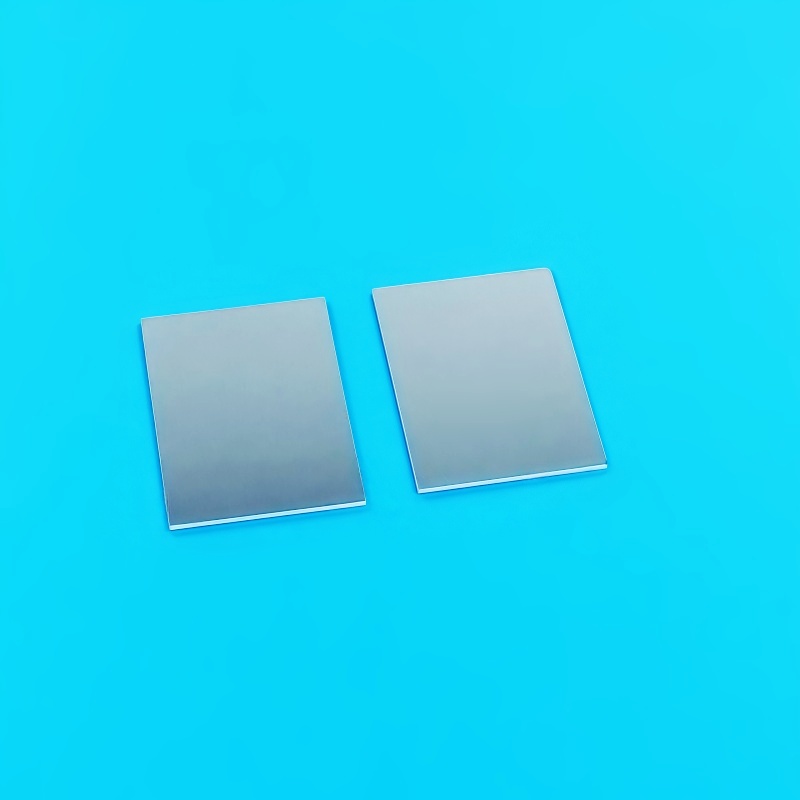
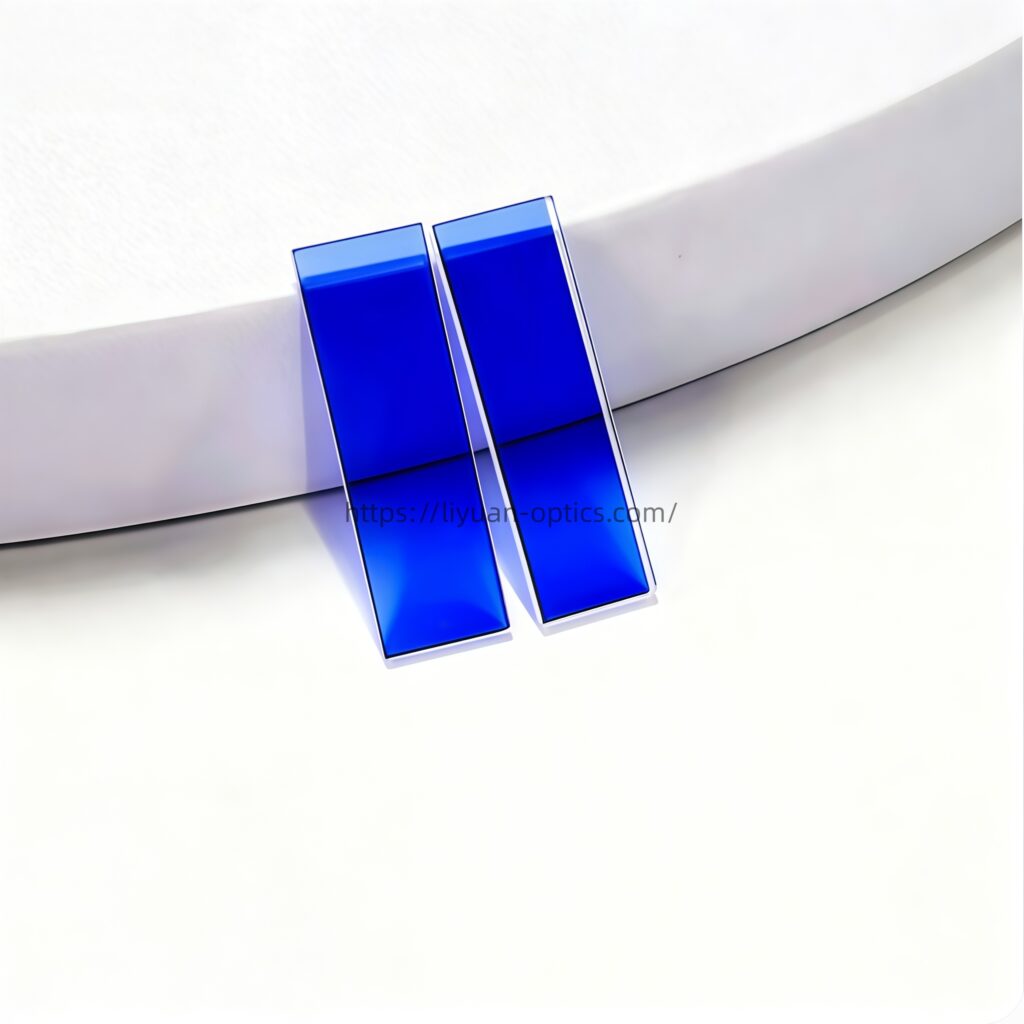
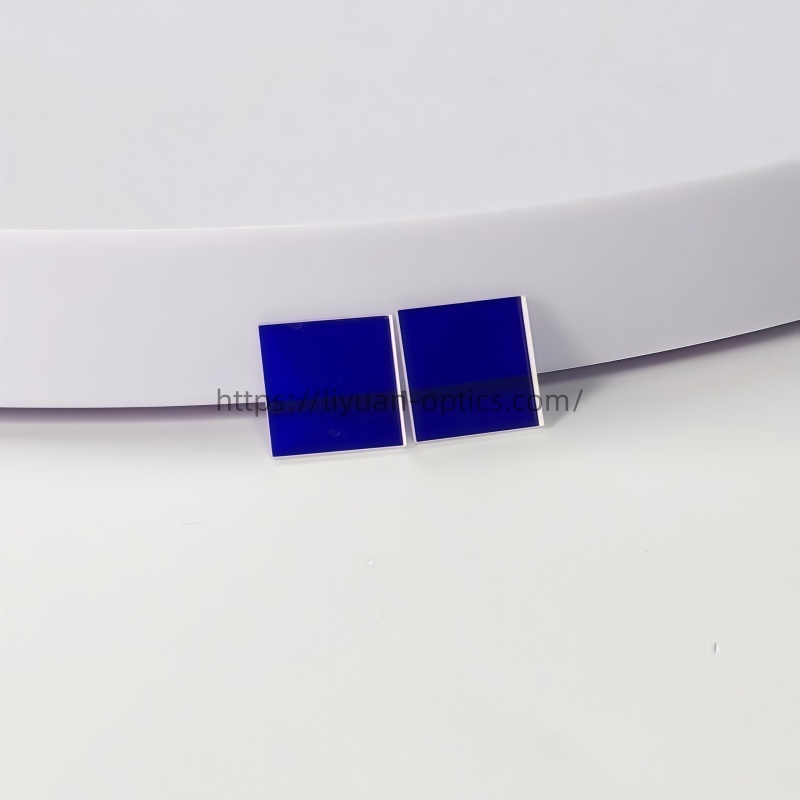
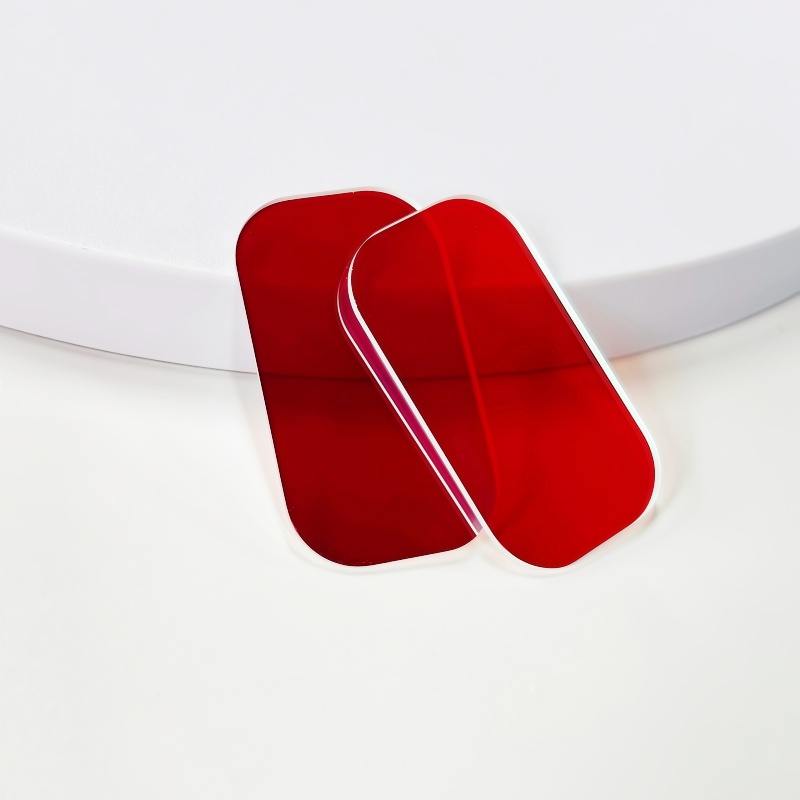
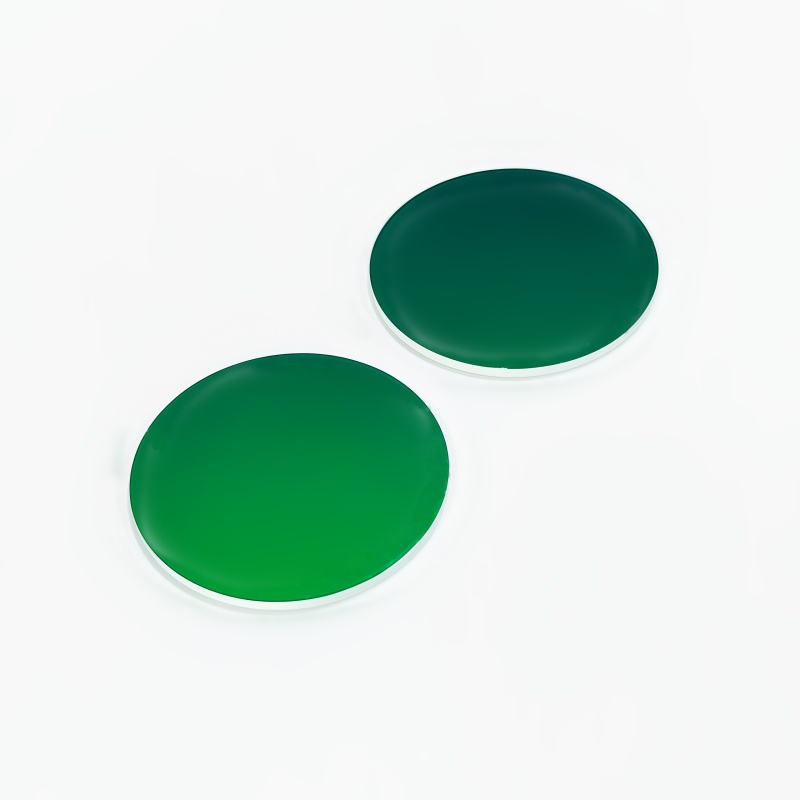
| Characteristics: | 540 & 620nm Dual Bandpass Filter |
| Type: | Interference Type Filter |
| Central Wavelength(in nm): | 540nm, 620nm |
| Peak Transmittance(%) : | >85% |
| Full Width at Half Maximum(FWHM): | 20nm |
| Optical Density (OD): | OD2 – OD3 |
| Shape: | Round, Square or customized. |
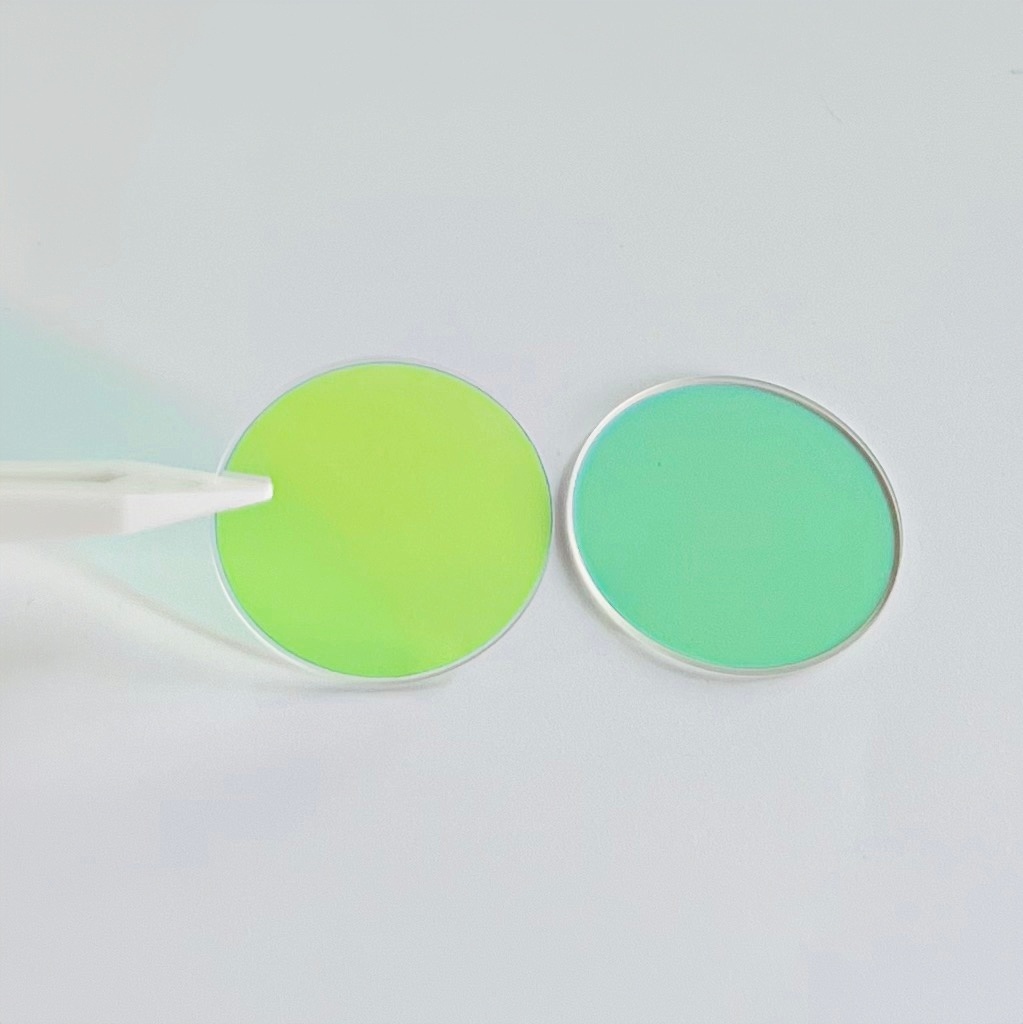
| Color: | Yellow-green |
| Angle of Incidence(AOI): | 0° |
| Surface Quality: | 60/40 scratch-dig |
| Dimension(mm): | Customized, max. 300x300mm |
| Thickness(mm): | 0.21、0.3、0.55、0.7、1.0、1.1、1.5、1.8、2.0、3.0mm…etc. |
| Substrate materials: | Ultra-clear glass,K9,BK7,B270,D2637T, Quartz Glass(Fused Silica) or other specified. |
| Remark: Support customized for wavelength from 200-2500nm. | |
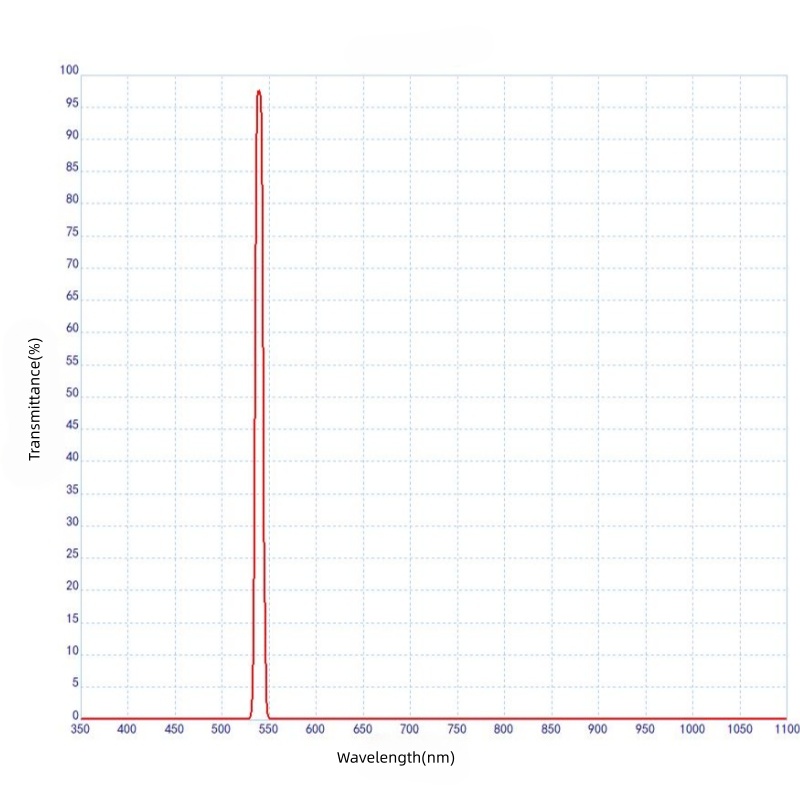
2.Measured Spectral Graph – 540 & 620nm Dual Bandpass filter:
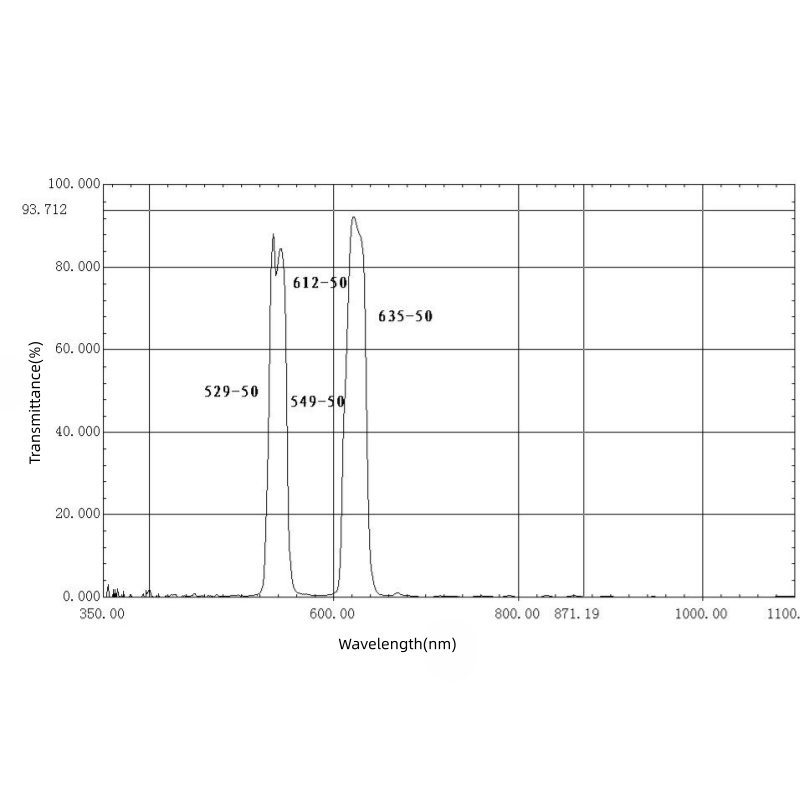 |
| Picture 1: 540 & 620nm Dual Bandpass Filters Spectral Graph measurement |
3.What is the difference between a dual bandpass filter and a standard (single) bandpass filter?
The main difference between a dual bandpass filter and a standard (single) bandpass filter is that a standard bandpass filter focuses on a single specific spectral passband, while a dual bandpass filter integrates two spectral channels into a single optical component.
4.What is typical application for 540 & 620nm Dual Bandpass Filters?
A 540 & 620nm Dual Bandpass Filter functions as an optical device that transmits light at two distinct wavelength bands, it centered at approximately 540nm and 620nm while effectively blocking all other wavelengths across its specified range. Typical applications of the 540 & 620nm Dual Bandpass Filter span a very broad range, encompassing fields such as fluorescence microscopy, flow cytometry, and biomedical diagnostics. Moreover, this filter also proves valuable in machine vision, as well as in facial recognition and other biometric systems.
5.What is key parameter when choose for right Dual Bandpass Filters?
When selecting a Dual Bandpass Filter, normally the following factors need to be taken into consideration:
- Central Wavelength (CWL):Firstly, CWL is one of key parameter to designate, it refer to the central wavelength at stable high transmission rate passband.
- Peak or Average Transmittance: typically ≥90%, Higher transmittance might need Anti-reflective(AR) coating.
- Full width at half maximum (FWHM): it refer to the interval between the two wavelength points where the transmittance rate reaches 50%.
- Blocking rate: usually in terms of optical density(OD), OD2-OD3 for standard and higher will be OD4-OD6 per requirement.
- Angle of Incidence (AOI): AOI need to be considered as Interference Filter is angle sensitive, 0° AOI by default, other AOI e.g. 30/45° need to be specified.
- Physical and environmental requirement: Substrate type, dimensions and thickness, surface quality, and environmental durability.
Related products:
650&850nm Dual Bandpass Filter, 40nm FWHM,Day&Night Optical Filter
Shenzhen Hengda Liyuan Optoelectronics introduced advanced optical technology that apply depositing nano-materials through ion-assisted evaporation onto a multilayer hard film in a high vacuum environment which coating layer is firm and has good tightness, and small bandwidth drift. Besides, Liyuan optoelectronics have been focus on optical coating for more than 17 years ,and the company offer one-stop optical filters solution including Narrow Bandpass Filters, IR cut-off Filters, Longpass & Short Filters, Notch Filters, ND filters, Star filters and Optical sapphire block.