
Product Descriptions:
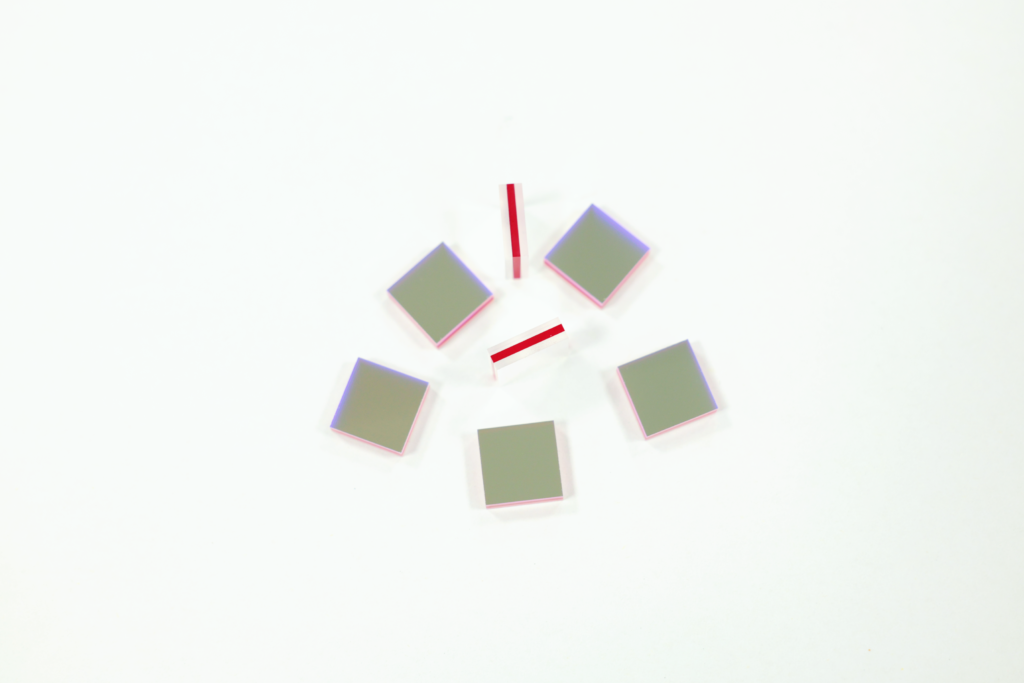
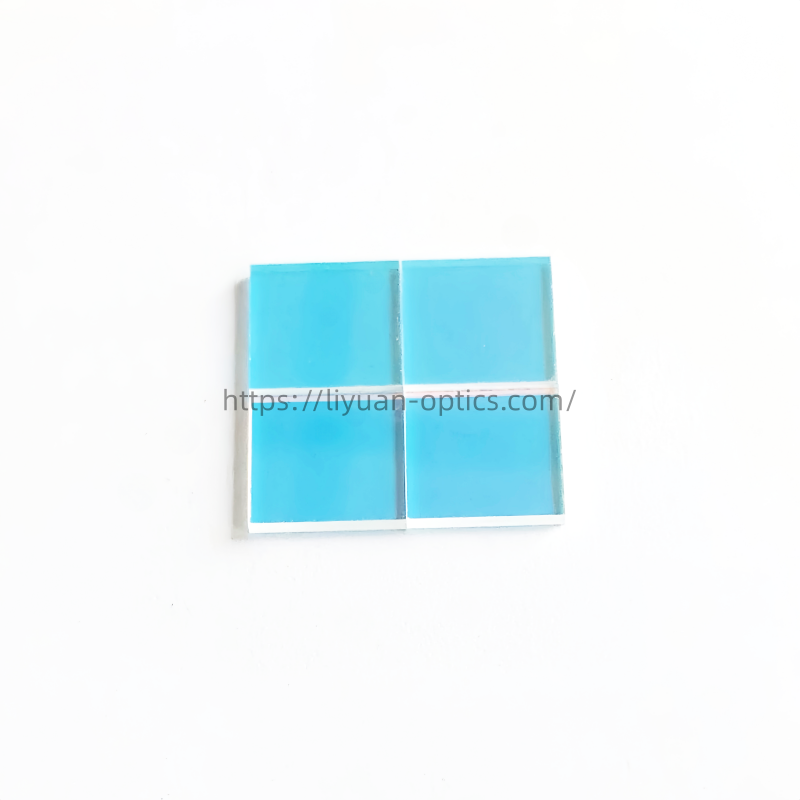
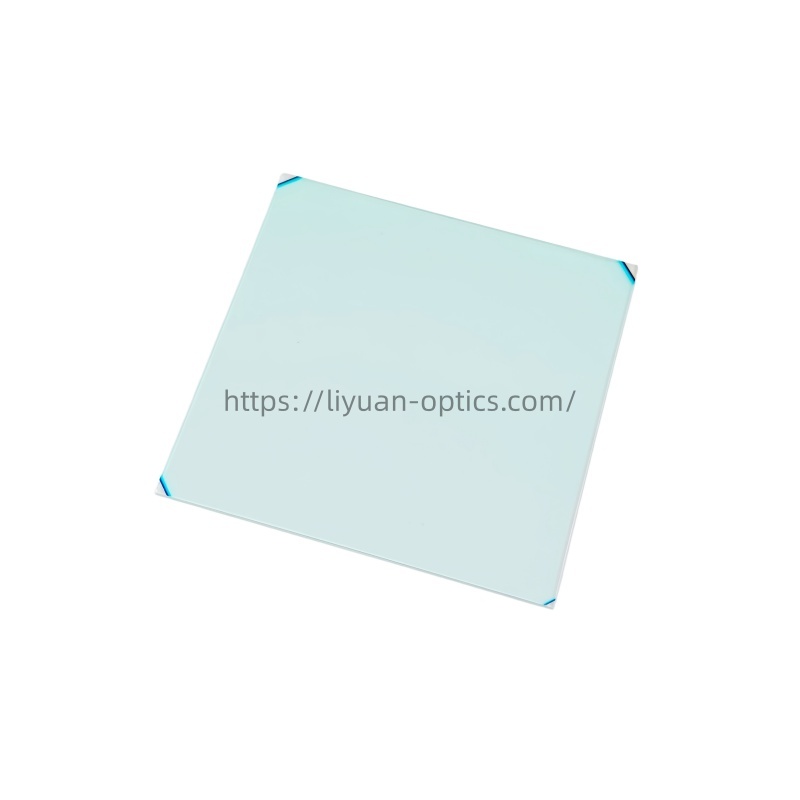
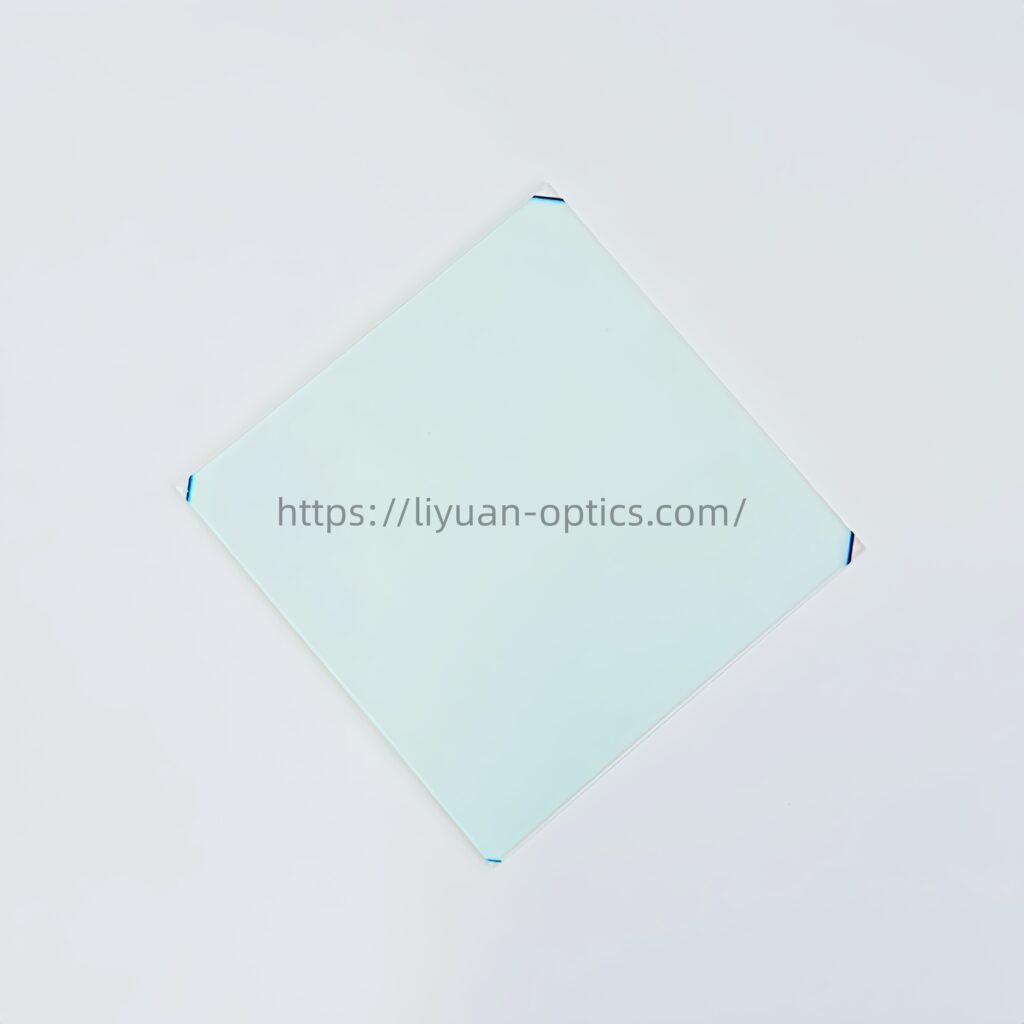
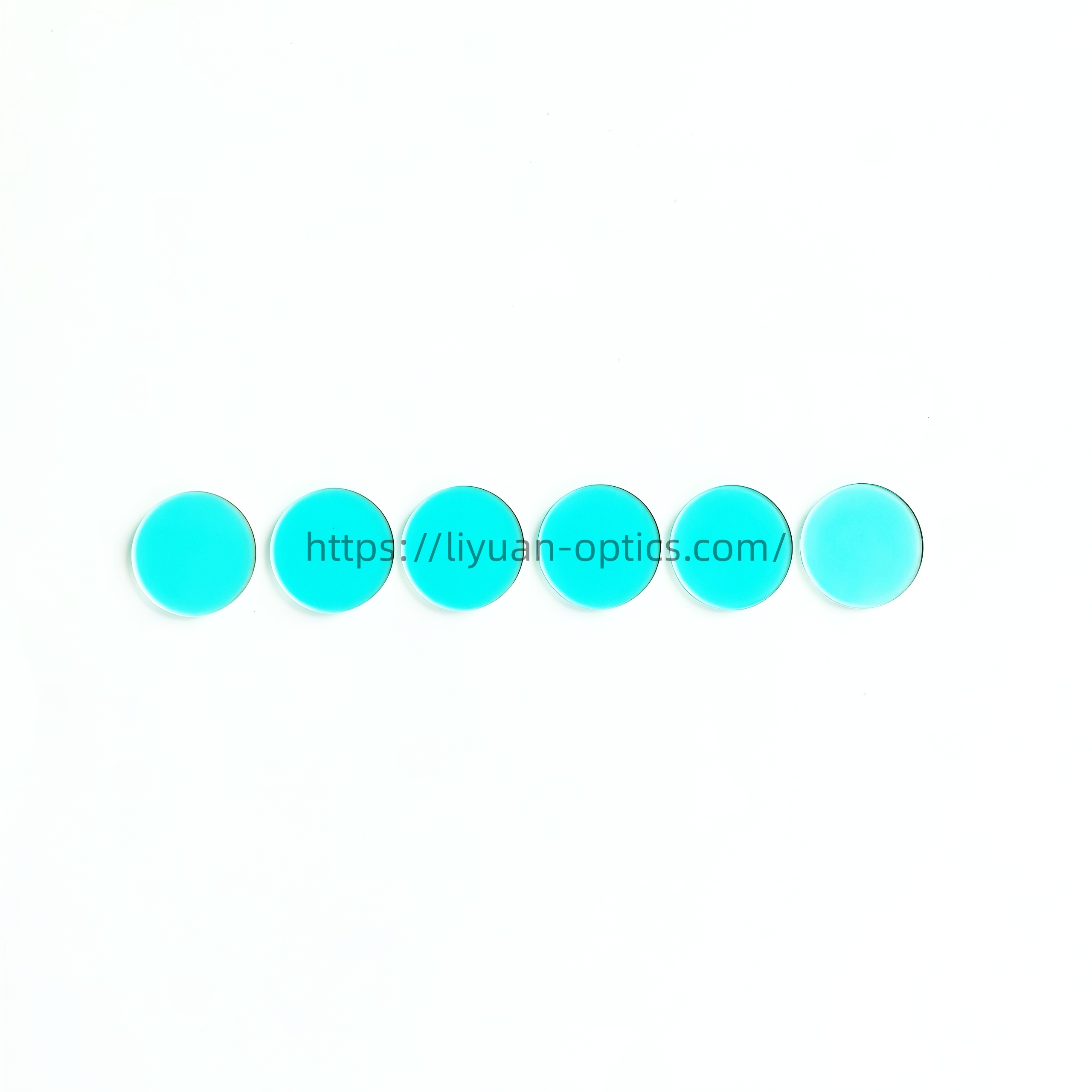
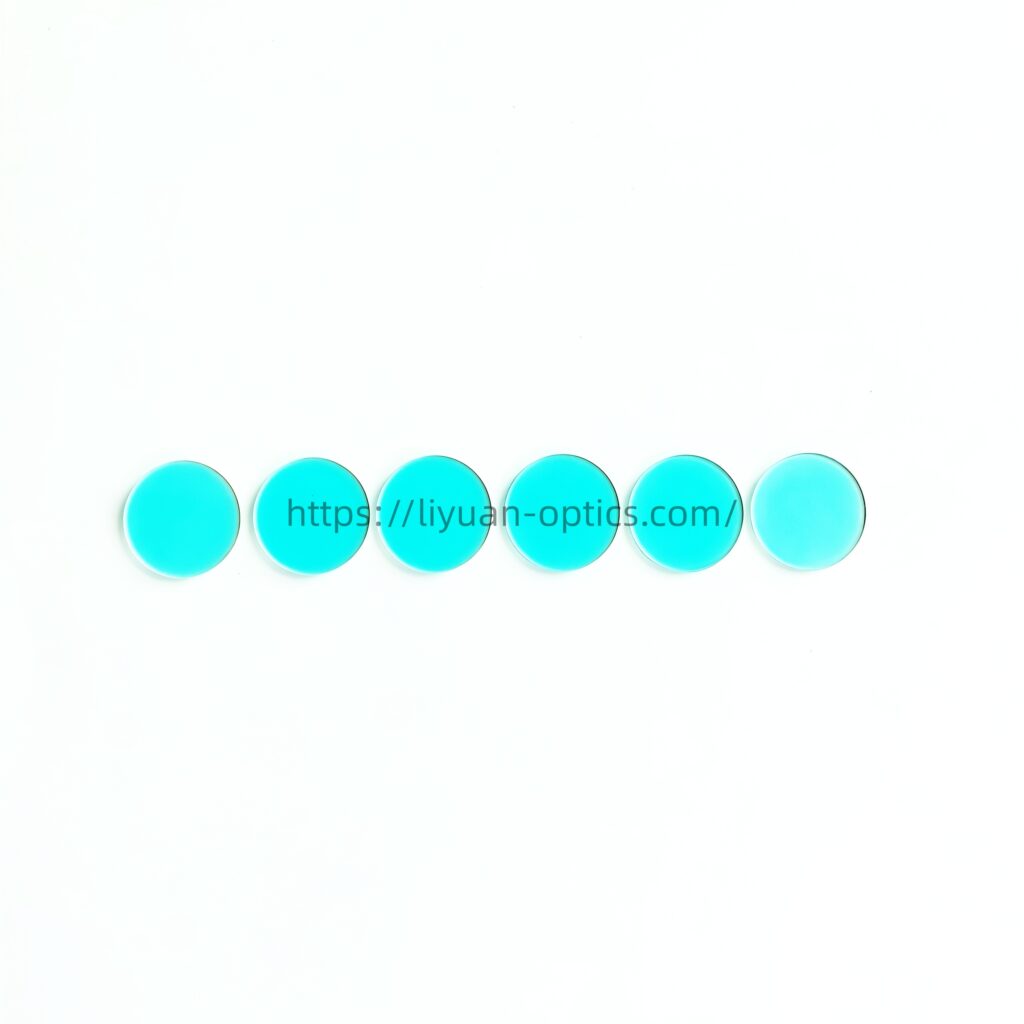
| Characteristics: | 720nm IR Cut-Off Filter |
| Type: | Interference type filter |
| Cut-off Wavelength(in nm): | 720 nm |
| Average Transmittance(%) : | >92% |
| Optical Density (OD): | OD2 |
| Color: | Light green |
| Surface Quality: | 60/40 scratch-dig |
| Dimension(mm): | Standard for 86x86mm, 80x80mm, other can customized, max. 300x300mm |
| Thickness(mm): | Available: 0.21、0.3、0.55、0.7、1.0、1.1、1.5、1.8、2.0、3.0mm…etc. |
| Substrate: | Ultra-clear glass,K9,BK7,B270,D2637T, Quartz Glass(Fused Silica) or other specified. |
| Remark:Spectral range:380-1100nm | |
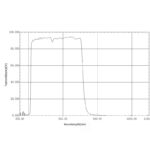
Spectral measurement graph
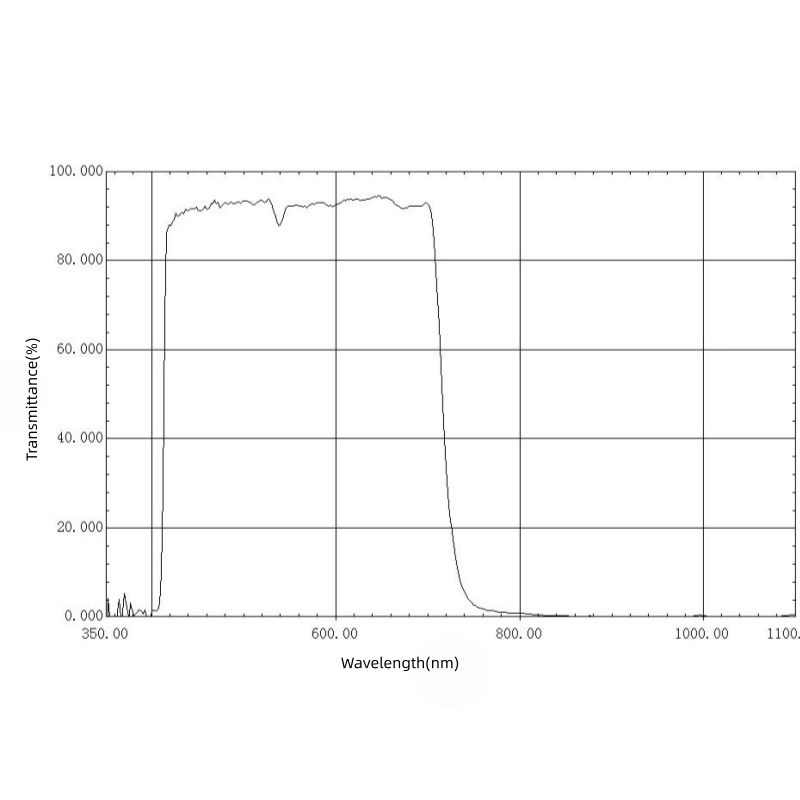 |
Picture 1: IR720nm Spectral measurement graph |
What is 720nm IR Cut-Off Filter?
A 720nm IR Cut-Off Filter is an optical component specifically designed for precise infrared light control. Its core function is to accurately block near-infrared light with wavelengths longer than 720nm, while efficiently transmitting visible light in the 400-700nm range.
What are typical application for 720nm IR Cut-Off Filters?
What is key parameter when choose for suitable IR cut-off Filter?
When selecting IR cut-off filters, normally the following factors need to be taken into consideration:
- Cut-off Wavelength: refers to the designated intermediated wavelength (e.g. 650nm) at transition from transmission to reflective zone, and measure at 50% transmittance.
- Peak or Average Transmittance(in %): typically ≥90%, Higher transmittance might need Anti-reflective(AR) coating.
- Blocking rate: usually in terms of optical density(OD), OD2-OD3 for standard and higher blocking rate will be OD4-OD6 per requirement.
- Angle of Incidence (AOI): AOI need to be considered as Interference Filter is angle sensitive, 0° AOI by default, other AOI e.g. 30/45° need to be specified.
- Physical and environmental requirement: Substrate type, dimensions and thickness, surface quality, and environmental durability.
Related products:
IR650 , 650nm Infrared cut-off Filter, Lens Filter, Support Customized
Shenzhen Hengda Liyuan Optoelectronics introduced advanced optical vacuum technology that apply depositing nano-materials through ion-assisted evaporation onto a multilayer hard film in a high vacuum environment which coating layer is firm and has good tightness, and small bandwidth drift. Besides, Liyuan optoelectronics have been focus on optical coating for more than 17 years ,and the company offer one-stop optical filters solution including Narrow Bandpass Filters, IR cut-off Filters, Longpass Filters, Shortpass Filters, Notch Filters, ND filters, Star filters and Optical sapphire block.
Remark:Because the interference type filter varies its performance at different angles, the spectral parameters usually determine its appearance color; moreover, the pictures in this link may originate from various shooting angles, so the actual color should therefore rely on the final spectral parameters required as the standard.