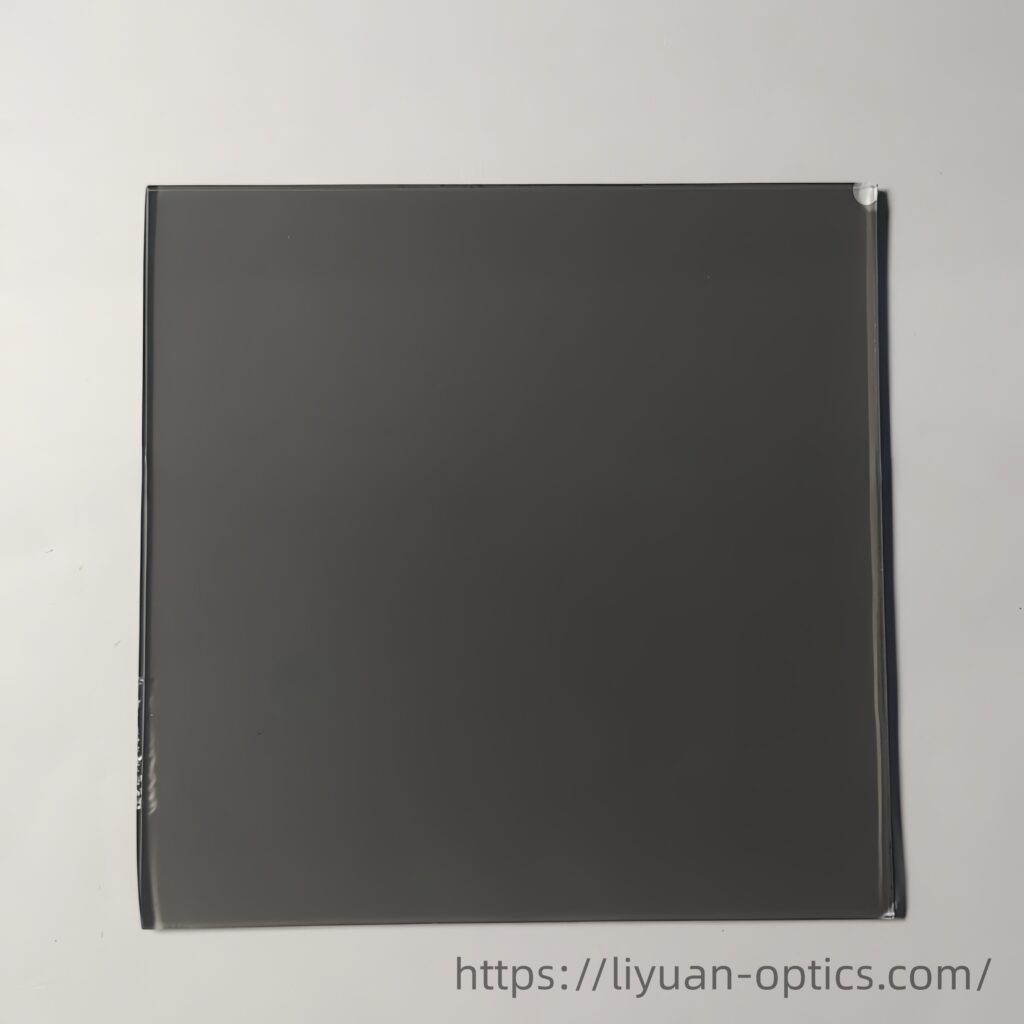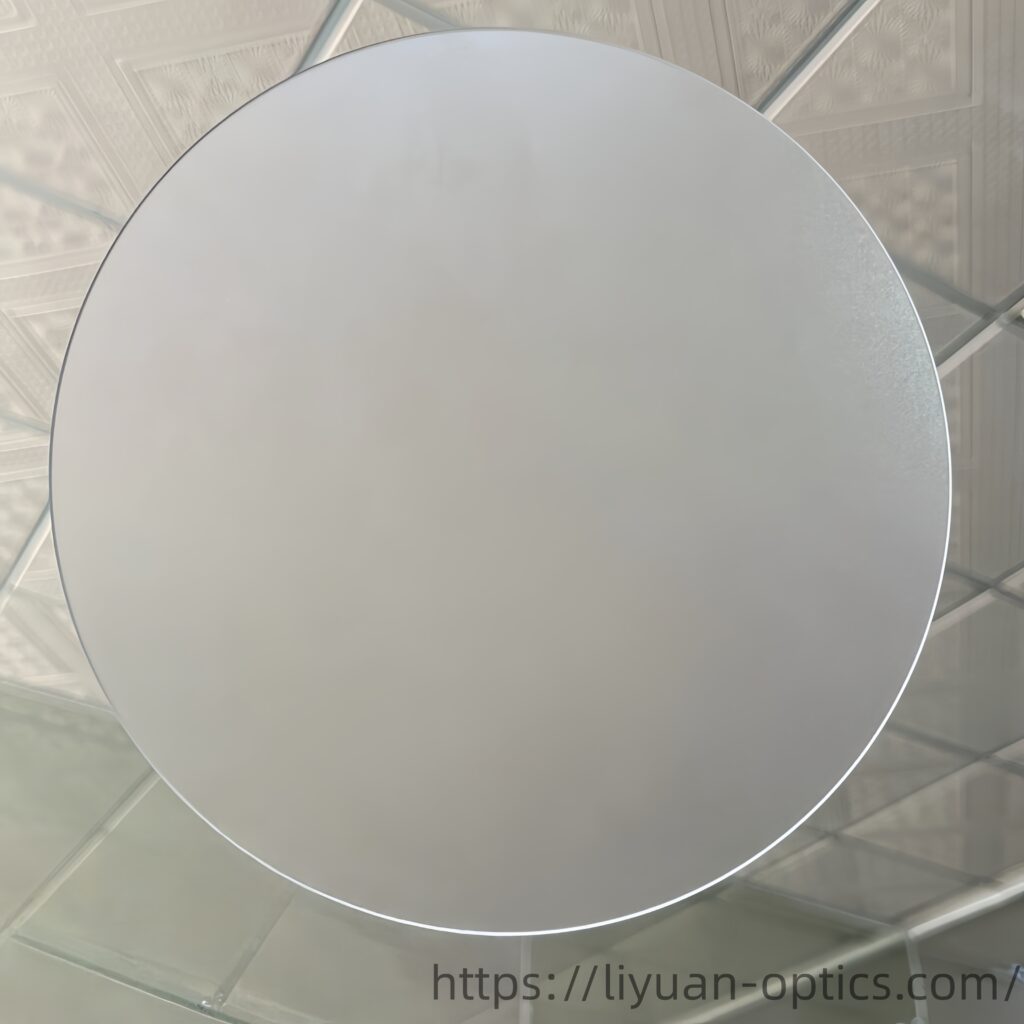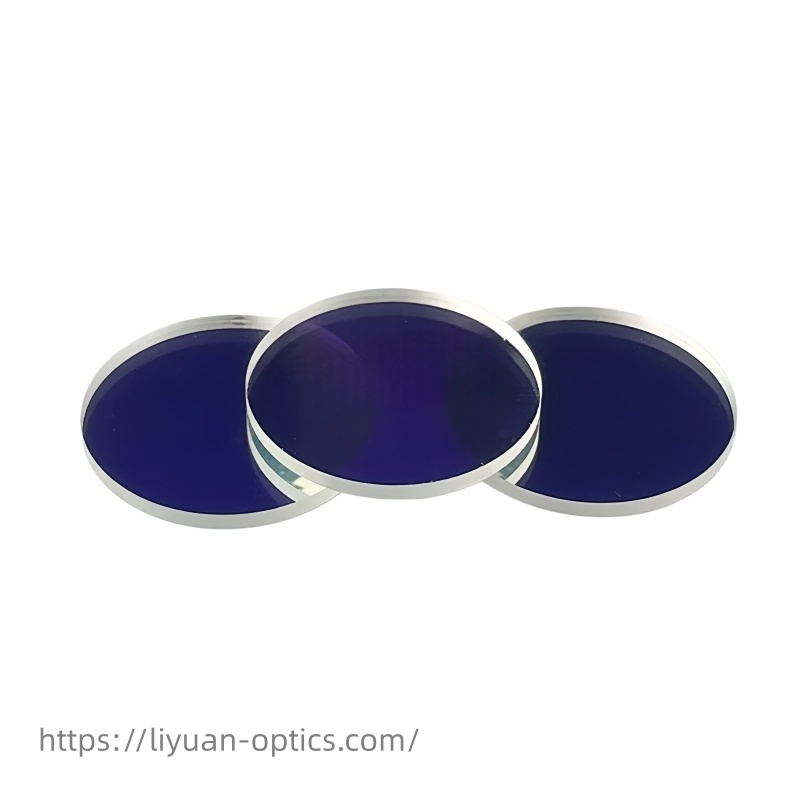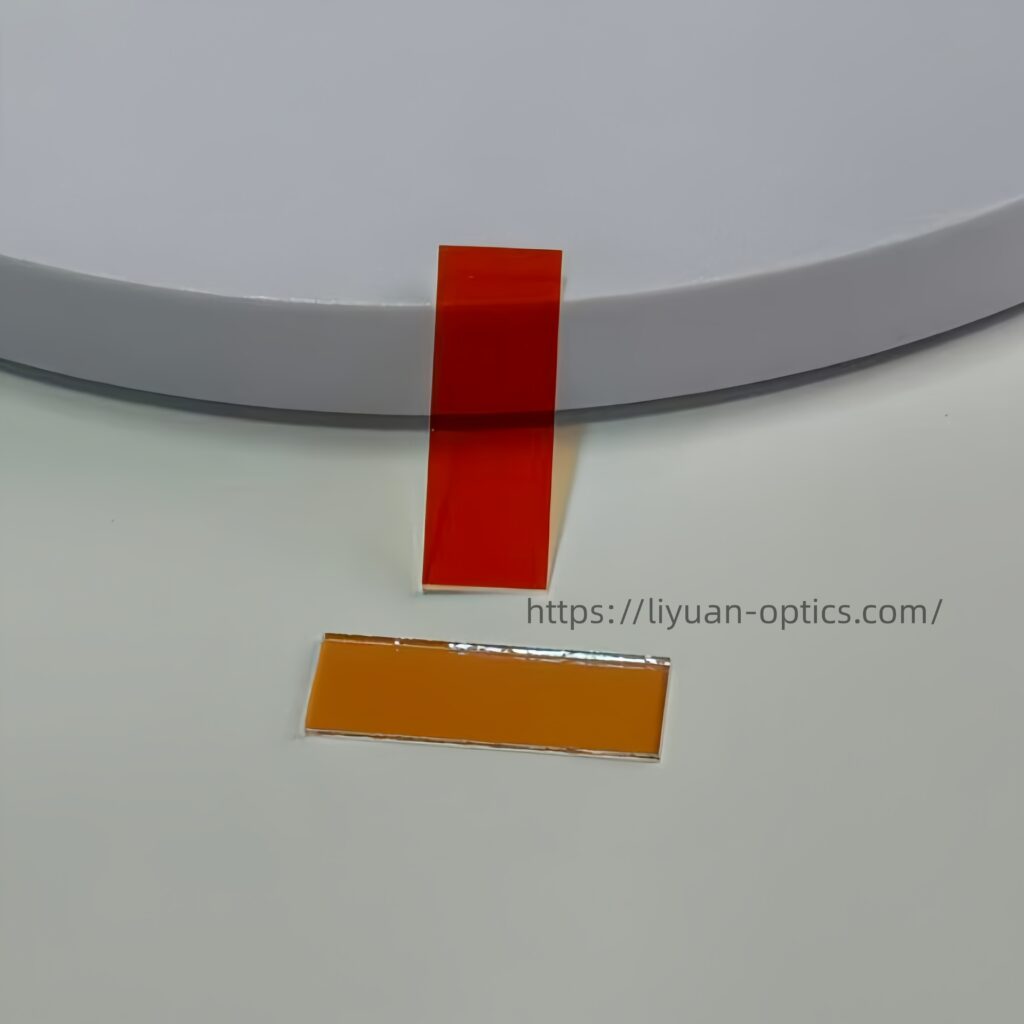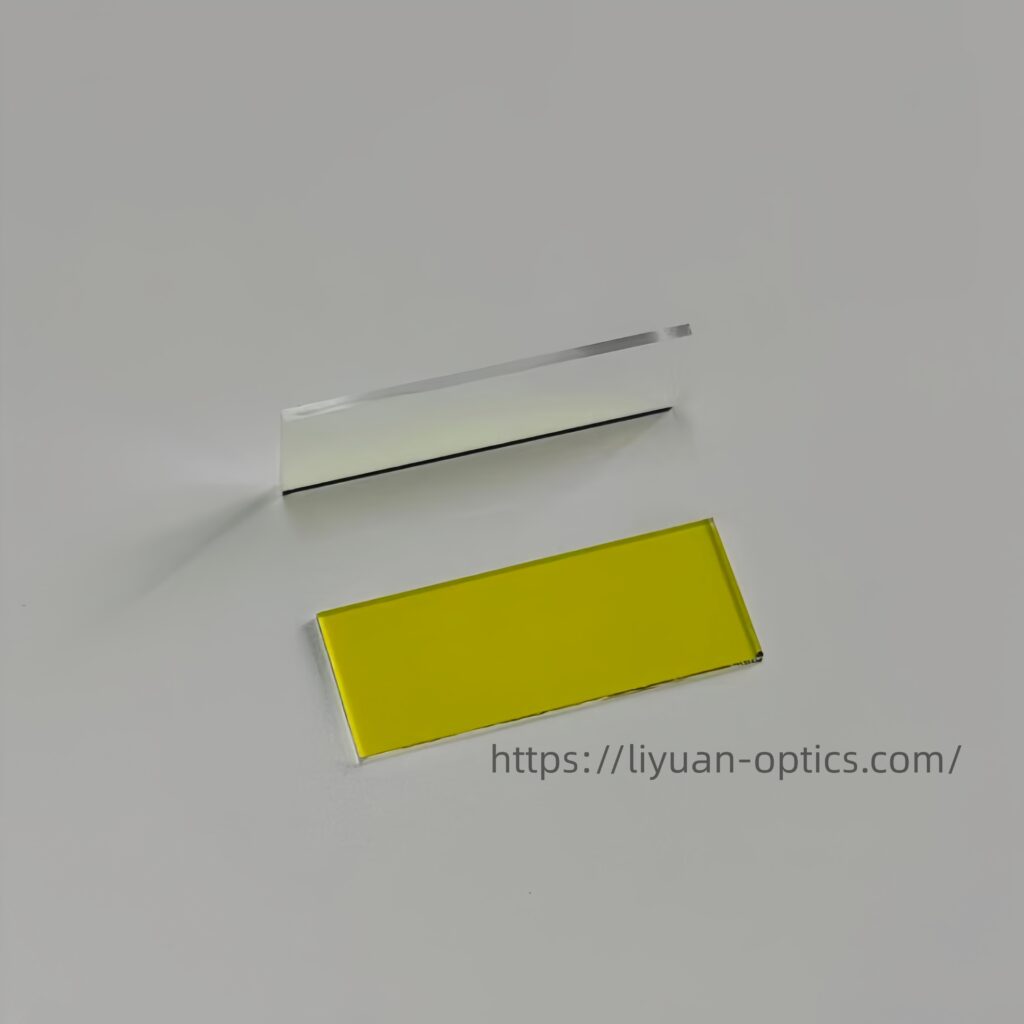


Product Descriptions:
| Characteristics: | Beam splitter |
| Transmittance:Reflectance (T:R) | 50:50 |
| Incident of angle (AOI) | 45° |
| Transmitted wavelength | 400-1100nm |
| Transmittance rate | 50% |
| Reflection wavelength | 400-1100nm |
| Reflection rate | 50% |
| Surface Quality: | 60/40 scratch-dig |
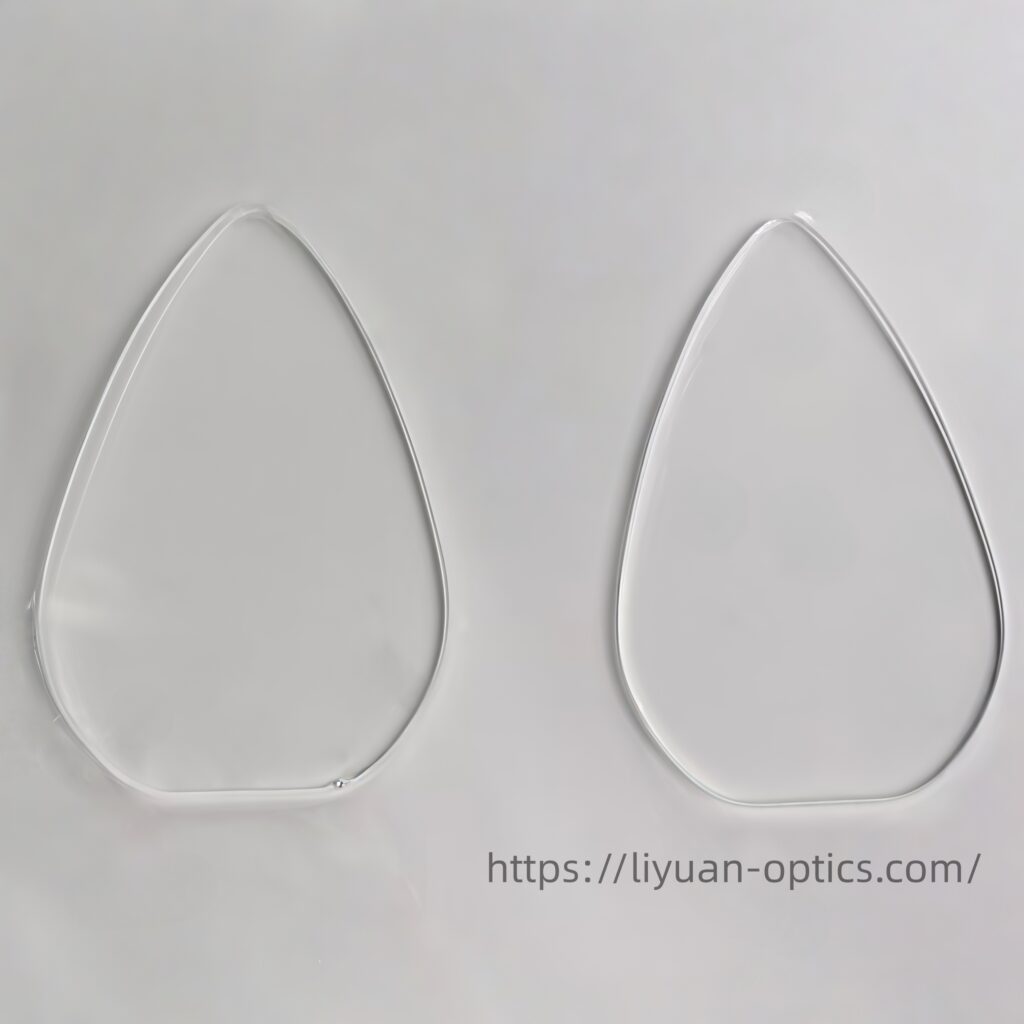
| Shape: | Round or Square, support customized on request |
| Dimension(mm): | Support customized on request, max. 300x300mm |
| Thickness(mm): | 0.21-3.0mm |
| Substrate: | Optical Glass |
| Remark:support customized from 250-1700nm. | |
Spectral measurement graph
 |
| Picture 1: 50:50 Beam splitter |
What is an Beam splitter and How does a beam splitter do?
A Beam splitter is an optical filter that splits one beam of light into two separate light beams under specific angle of incidence. Commonly, it finds applications in optical systems to divide, combine, or redirect light paths.In simple terms, a beam splitter allows part of the incoming light to pass through and reflects the remaining light to another direction.
For example:
- 50% of the light → transmitted straight through
- 50% of the light → reflected at 90°
A beam splitter works based on the interaction between light and a partially reflective optical surface, so the ratio between reflected light and transmitted light depends on the coating design and application requirements.
What are key parameter to select a suitable beam splitter for your application?
When selecting a beam splitter, normally the following factors need to be taken into consideration:
- Splitting ration or Transmittance:Reflectance (T:R):It’s the ratio between transmitted and reflected light,such as 50:50,70:30,80:20…etc.
- The operating wavelength: Usually, refers to the wavelength band in which the light source operates, such as 400-700nm, 400-1100nm or Specific light source including 475nm Blue light,532nm Green light, 650nm Red light, 850nm infrared light…etc.
- Angle of Incidence (AOI): AOI need to be considered as Interference Filter is angle sensitive, 45° AOI by default, other AOI need to be specified.
- Size and thickness: The dimensions and thickness of the product, as well as the tolerance requirements.
- Physical and environmental requirement: Substrate type, surface quality, and environmental durability.
Shenzhen Hengda Liyuan Optoelectronics introduced advanced optical vacuum technology that apply depositing nano-materials through ion-assisted evaporation onto a multilayer hard film in a high vacuum environment which coating layer is firm and has good tightness, and small bandwidth drift. The company have been focus on optical coating for more than 17 years ,and the company offer one-stop optical filters solution including Narrow Bandpass Filters, IR cut-off Filters, Longpass Filters, Shortpass Filters, Notch Filters, ND filters, Star filters and Optical sapphire block.
Remark:Because the interference type filter varies its performance at different angles, the spectral parameters usually determine its appearance color; moreover, the pictures in this link may originate from various shooting angles, so the actual color should therefore rely on the final spectral parameters required as the standard.